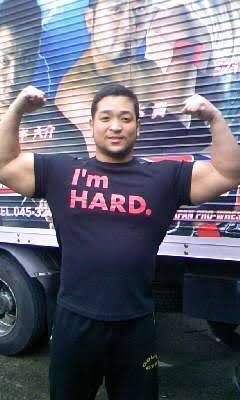
Most people in the world get up and go to work every day, do their job, and go home. Certain dedicated folks become the example: always showing up to work, giving their best, and, in a just world, being rewarded handsomely for a job well done. This archetype has become so common that we’ve started to apply the term “lunch pail guys” to certain athletes because they seem to represent that head-down, hard-working mentality that has become the exception rather than the rule in pro sports. This kind of guy is almost antithetical to professional wrestling. An art form that requires not only the physical but the emotional, and where loud and brash personalities dominate the landscape, hardly seems like the place for a guy who shows up, does his job better than anybody, and leaves the pomp and circumstance at the door. Thankfully, Daisuke Sekimoto is not any ordinary wrestler.
In 2026, fans have become enamored with a certain type of body. The days of needing to be 260 pounds of chiseled muscle are over, but so are the days where a wrestler could just look like your fattest, drunkest uncle. Many different types of wrestlers and bodies exist these days, and it’s a great thing that people are afforded the opportunity to prove themselves based on talent rather than looks. However, it’s become obvious over the last few years that for a certain section of the fanbase, MEAT (and I don’t mean Sean Stasiak) is back on the menu. We’re seeing a renaissance of burly men built like refrigerators, with chants of “meat” echoing through arenas anytime two guys with a waist size above 36 face off across from one another, guys who are often as wide and muscular as they are tall.
Big E seems like the flashpoint for this particular resurgence in our collective appreciation for these kinds of guys (and was a prime example himself) when he coined the phrase “big meaty men slapping meat.” This was in reference to him wanting a match with Goldberg, but he spends the rant talking about how that’s his favorite style of wrestling. I have to give it to Big E, because it’s mine too, and in the six-ish years since that quote started making its way around the internet, more and more of us have come out of the woodwork to proclaim our affinity for strong, physical, realistic-looking pro wrestling. If Big E is the apostle Paul, then Daisuke Sekimoto is our Jesus Christ.
Sekimoto spent almost all of his career plying his trade for Big Japan Pro Wrestling, a smaller company in Japan that never had the money or production values of the big promotions but was able to find its niche and survive for over 30 years. Big Japan is notable for having two distinct styles that dominated their events. There was the deathmatch division, where some of the masters of the style took it to new, innovative, and terrifying heights. There was also the Strong division, full of the hard-hitting, meat-slapping violence that I love. Discovering a promotion that specialized in my two favorite kinds of wrestling was like manna from heaven. Sekimoto worked in both divisions, but he was always more of a Strong wrestler, and by the late ’00s he would be almost exclusively in that division, usually in main events. This didn’t stop him from breaking out the occasional deathmatch tactic, and more importantly, it made him tough enough to withstand anything his opponents could throw at him. What’s a stiff chop when you’ve taken a light tube? What’s a goon to a goblin?
This was the era when I was downloading any Big Japan I could get my hands on thanks to the download and torrent sites of the time. Sekimoto grabbed me, and I was seeking out anything with his name attached to it. Despite only standing 5’9” (and that may be generous), he wrestled with the intensity and drive of someone a foot taller, throwing chops that sounded like shotgun blasts, suplexes that seemed horrifyingly dangerous, knowing when and how to sell despite his character, and carrying an edge that felt effortlessly cool. Sekimoto was everything I wanted to see in a pro wrestler.
Sekimoto’s matches would often follow a deceptively simple rhythm, and that’s where the magic lives. There’s a moment early on where he plants his feet, squares his shoulders, and invites his opponent to hit him as hard as they possibly can. This is sometimes called “Dumb Jock Wrestling” and for good reason. This is a challenge, a meathead who knows he can take whatever is thrown at him. The chop lands, loud enough to make the crowd wince, and Sekimoto barely reacts. He exhales, nods once, and fires back something twice as heavy. The crowd starts to buzz, not because something flashy happened, but because they understand what kind of night they’re in for. Sekimoto doesn’t rush, doesn’t panic, and doesn’t look for shortcuts. He keeps pressing forward, an unrelenting force of nature, the kind that saps both men’s energy with every repetition. By the end, his opponent looks spent in a way that feels real, like someone who’s just worked a full shift and realized there’s still an hour left on the clock.
I was vaguely aware of the Japanese tendency to stay with one company, and as much as I would fantasy-book him against the big stars and best workers of the day, I knew it was probably a futile exercise. While this has started to change in recent years, often where you start in Japan is where you finish. There’s a loyalty to the employer that isn’t seen here in America, especially in the cutthroat world of pro wrestling. Sekimoto would occasionally tour Europe or America, and he was highly in demand on the Japanese indies. These excursions were a glimpse into what really drives Sekimoto, and that was work. He showed up everywhere and worked all over the world. Always looking ready in his plain black boots and trunks, Sekimoto comes off like he doesn’t have time for frivolities like flashy costumes and showy technique. He approaches the ring like a man who wants to finish work early so he can go eat a steak.
He became a reliable presence on small indies throughout Japan, someone people would pay to see because he delivered every time. The kind of guy who could reliably add a couple hundred tickets to any card, but only a couple hundred tickets. Big Japan itself is only so big, usually sitting in the bottom half of the ten biggest wrestling companies in Japan at any given time. Sekimoto became a king of the small room, the kind of guy who feels destined for somewhere much bigger. Seeing Sekimoto on a small indie has to feel like seeing a legend in a tiny venue. I can only imagine the denizens of Shin-Kiba 1st Ring felt the same way I did seeing KRS-ONE at a bar attached to a bowling alley.
As much as I wished he would end up somewhere else, to have a chance to be the star I knew he could be, as big as anyone in Japan, he wasn’t ever going anywhere bigger than Big Japan. The loss of a career that could have been looms bigger than any single loss on a booking sheet. He accepts his fate, the crowd accepts it, the booking makes sense, and life moves on. These are losses that don’t diminish him in the ring, but they quietly reinforce the idea that he exists to sustain the ecosystem rather than transcend it. What makes that limitation sting is how clearly he understands it. Sekimoto wrestles like someone who knows exactly where he stands in the hierarchy and has made peace with it. There’s no sense of chasing stardom or trying to reinvent himself to fit the moment. He doesn’t beg the audience to see him differently, and he doesn’t rage against the role he’s been given. He just keeps working, because the work itself is the point. In a business obsessed with becoming something more, Sekimoto has spent his career being exactly what he is, and paying the price for it.
Sekimoto is a small-scale entertainer, and while that may sound like a slight, it isn’t meant to be one. He gets to pay his mortgage with his art, and that’s a luxury many of us dream of but very few get to live out. Living in a tourist town has given me the opportunity to meet a lot of people who fall into this category, and the one commonality among all the athletes, musicians, dancers, and actors is that they hustle hard because their art usually isn’t enough. These people give private lessons, coach, drive Lyft and DoorDash, and do anything else they can to make ends meet, but they do it because at the end of the day, they still get to do the thing they love most. Sekimoto was hustling on these indies, but like the artists I’m so lucky to know, he never dogged it. He made sure everyone who paid to see him got his best effort, and hopefully he made a lot more on Polaroids and T-shirts than his booking fee.
Professional wrestling loves to dress exploitation up as passion. It tells you that if you really love this, you’ll sacrifice for it, grind through pain, stay loyal, and trust that things will eventually work out. That story is convenient for the people making money and devastating for the people doing the work. Passion becomes a leash. Loyalty becomes an excuse, and anyone who questions the arrangement is framed as bitter or ungrateful rather than realistic.
Sekimoto did everything the mythology of wrestling tells you to do. He stayed. He worked. He carried shows, trained bodies, anchored cards, and made companies look more legitimate than their bank accounts suggested. In artistic terms, his career is unimpeachable. In economic terms, it’s a warning. Big Japan needed him to survive, but when survival itself became shaky, Big Japan simply couldn’t offer what was necessary to stay afloat. The quality of his work never dipped, yet the stability attached to it eroded anyway. That’s not a failure of effort, that’s capitalism functioning exactly as designed.
As time wore on, Big Japan was able to launch a streaming service like so many other promotions before them. Hopefully this could give people an outlet to watch and discover Big Japan and its style of pro wrestling. Unfortunately, it turned out that the people in Japan who wanted to watch Big Japan were already doing so, and the small but dedicated Western fanbase was iffy about actually spending money on the product. Business declined, and when COVID hit, the company came very close to going under completely. This is where art and capitalism invariably clash. A guy like Sekimoto has bills to pay, and as loyal as he’d been to his company, there was a shrinking opportunity for him to secure his future as his career and body began to wind down. We all want to be able to create, but if we can’t sustain ourselves and our families, what joy is there in creating anything at all?
This is the part wrestling doesn’t like to talk about. There is no reward for being dependable if you aren’t profitable enough. There’s no pension for carrying a company through its lean years, no protection for aging bodies that gave their best years to the grind. The industry feeds on people like Sekimoto because they believe in the work more than the business believes in them. And when the math stops working, the romance evaporates, leaving wrestlers to make cold, practical decisions.
Post-COVID, he once again began teaming more frequently with friend and rival Yuji Okabayashi, and now he had a partner to tear up Big Japan and the indies with. Okabayashi was a kindred spirit to Sekimoto, another short, stocky tank of a man who loved to fight physically and could take punishment as well as dish it out. The two of them made waste of all the young pretty boys put in front of them. They made the best of a bad situation by combining forces and doing what they could to keep working and keep living their dream. Sadly, by mid-2023 Okabayashi’s body had been battered too badly, and he entered a state of semi-permanent retirement. Sekimoto was back to his solo grind, a lonely warrior looking for his next chance to prove himself and collect a check.
Eventually, Sekimoto had to look out for himself and his future. Bookings came more frequently from promotions happy to have him around. In 2025, he officially became a freelancer, no longer tied to any one company. While this was expected, he’d effectively been one in all but name for years, it still felt strange to see him fully divorced from Big Japan. Sekimoto becoming a freelancer wasn’t betrayal; it was acknowledgment of reality. You can’t pay bills with respect. You can’t fix your body with reputation. At some point, belief has to give way to survival. That doesn’t make him cynical. It makes him honest.
Wrestling will continue to celebrate passion in public while quietly relying on people to absorb the cost in private. Careers like Sekimoto’s will remain admirable, necessary, and fundamentally undervalued. The guy gave over 25 years of his life to a company, carried it through its leanest years, and never stopped delivering. When the lights flickered, he adapted. He kept working. He stayed true to his craft. He didn’t need a belt or a spotlight to validate him; he needed a ring, a crowd, and the work itself. Today, he has a full belly, bills caught up, and a job that is also his creative passion. Not everyone gets that. Not everyone endures like he has. And maybe that’s the point: survival and artistry, labor and love, they can coexist, even when the world forgets to notice. We should all be so lucky.


 Raised By the Ring