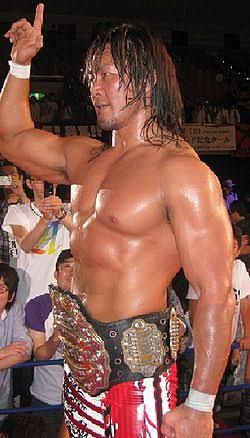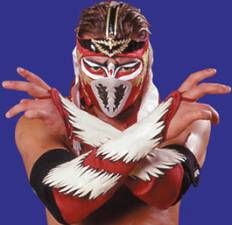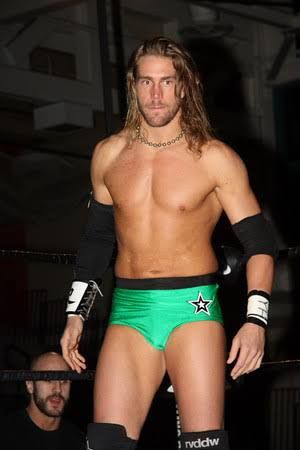
• Chris Hero

    When you start to grow and mature both as a person and as a fan, you start to want to be around and support people like yourself. We make friends who share our interests and our values. We start to watch things with a more critical eye, understanding the finer and more nuanced points of why we enjoy them. It would stand to reason, then, that as I got deeper and deeper into wrestling, I became naturally drawn to people who seemed like they truly loved it the way I do. The kind of wrestlers who are not only fans themselves, but also stewards of the history and lore of their craft. People who eat, sleep, and breathe wrestling so intensely that they could be called a “wrestling genius.”

    Chris Hero is a guy that knows ball. He showed up in nearly every major American indie over the 2000s and spent a large portion of that time spreading his knowledge to coworkers and fans across the country. A true student of the game, over the years we saw him wrestle a number of different ways depending on his character and whatever new, interesting thing he had just picked up from watching some old tape. This was a guy who paid attention to every small detail, making sure that the fans who watched closely and obsessed over the small things, like he did, were rewarded for paying attention. He worked at or near the top of every independent promotion worth its salt, raising the bar for in-ring work wherever he went.

    I spent my youth involved in the local music scene here in my hometown, and I saw a ton of these types of musicians in my time going to shows. People who seemingly had all of the talent, charisma, and virtuosity of the rock stars headlining arenas and stadiums, playing for 50 people a night. People more interested in playing music for the other nerds in the crowd than for fame and fortune. The kind of people who wear their influences on their sleeve and have a fount of knowledge they’re always happy to share with others, because they see the same passion in you that they feel for the music they play.

    Obviously, some guys get into music for money, fame and chicks, and some get into wrestling for the same reasons. Many of the most ardent fans of both however, tend towards the nerdy and obsessive. I know multiple women personally who have been ignored in favor of a guitar, and the trope is laden throughout film and song. I have almost certainly fumbled a time or two in my life by bringing up some obscure wrestler because I couldn’t help myself. Those of us who get really into something can’t help but let it overtake our lives, and music and wrestling are full of them that even I occasionally think it’s a bit much. Metalheads and Joshi fans, i’m looking in your direction.

    As I got deeper and deeper into my own wrestling fandom as a young man, Hero stood out to me as somebody who seemingly had that same passion that I saw in my local music scene, but in regards to pro wrestling. He worked his knowledge into his performances in a way that came off as both annoyingly smarmy and effortlessly entertaining.

    The character was cocky and braggadocious about his knowledge, often using his superior prowess to frustrate and annoy opponents who couldn’t counter his sneaky tactics. The man himself, however, seemed ready to share those tactics and that knowledge with all who were willing to listen, as evidenced by his time as a trainer, coach, and guest clinician over the years. Starting from an age at which many wrestlers are still working out the basics, he was already sharing his passion and knowledge with the next generation.

    He has also been passionate about making sure that the people who did the work get proper credit. Hero’s arsenal of European-influenced moves were openly taken from the “World of Sport” tapes of ’70s and ’80s British wrestling that began circulating in the 2000s. This was new footage to nearly everyone outside of England of a certain age, and Hero seemingly led the charge to study, understand, and incorporate what many of us were seeing for the first time. While not the only evangelist of the style — Bryan Danielson, Colt Cabana, and Zack Sabre Jr. are also notable aficionados — Hero seemed to take special care and love with the greats who originated it. Hero made the technical prowess of Johnny Saint, the clever heel shenanigans of Mick McManus, and brilliant pacing Steve Grey into things that nerdy American teenagers and twenty-somethings would all of a sudden recognize and want to seek out.

    Japan and Mexico are easy gateways for an American fan, but British wrestling seemed irreconcilably different to my brain until I started to see the influence show up in the American indies. Wrestlers like Hero, who not only adopted the moves and mannerisms, but was a tireless crusader in interviews for the progenitors to get their roses, made me a better wrestling fan. That’s a rare thing, and it doesn’t happen by accident. It comes from someone who genuinely loves the history and wants you to love it too. Hero was like the record store owner who gave you a black flag record when you came in looking for Green Day. Changing people’s tastes and opinions not only of him, but of the style as a whole one cravate at a time.

    Hero was a key player in all of the major independent promotions across the U.S. His time in Chikara saw him as the central figure in the promotion’s early years. His turn on partner Mike Quackenbush to form the original iteration of the Kings of Wrestling with Arik Cannon and Claudio Castagnoli sparked my first real exposure to Chikara. They built years’ worth of stories into a feud centered around a single move, a submission dubbed “The Chikara Special.” This was the kind of micro-detailed storytelling that a nerd like me, who grew up on comic books and anime, could really sink his teeth into.

    His time in IWA Mid-South was an example of his ability to adapt to any style or situation. He was forced to work with every type of wrestler under the sun, in a promotion caught between serving its traditional southern fanbase and the audience of hardcore fans purchasing tapes and DVDs to see their favorite young stars putting on high-end matches. Hero could work bloody deathmatches with the Necro Butcher, brawl so hard it seemed like a real fight with Ian Rotten, rile up a classic southern wrestling crowd with Tracy Smothers, and go 90 minutes with CM Punk. It was the perfect balance of entertaining fans like myself, and fans like I used to be. Those small crowds in Kentucky and Indiana would often make up for the lack of size with a vitriol that belonged in the mid south coliseum 20 years prior.

    That versatility made him the perfect person to lead the CZW crew that invaded Ring of Honor in 2006. He’d been the Iron Man Champion, he was no stranger to a bloody battle, but he wasn’t necessarily the “face” of CZW the way a more hardcore wrestler might have been. That was the point. Hero had already been fueling the vitriol of a certain set of ROH fans for years before he ever set foot in the company, which made him a far more interesting villain than a pure deathmatch guy would have been.

    He was perhaps the most discussed wrestler in the history of the ROH forums, and certainly the most discussed before he ever worked a match for the company. Multiple times a week, seemingly, a thread would pop up asking why Hero wasn’t booked in ROH. The thread would then devolve (as internet conversations often do, this is not a new phenomenon) with reasonable, intelligent, well-thought-out people on one side saying it was preposterous that someone that good wasn’t in the supposedly top indie in the country, while others, who were wrong, dumb, and smelled bad, derided him for looking sloppy, being self-aggrandizing, boring, and not worthy of a promotion like ROH. (Can you guess which side I was on?) 

    Everybody fancied themselves an expert, and civility was often the last thing on anyone’s mind when the insults over Paul London or Jimmy Jacobs would arise. We were all posting about our favorite company while patiently waiting for our next DVD to arrive (or to show up on the torrent sites…sorry Cary) so we could participate in the conversations the live fans had already seen. Often with only a report to go on, the conversations could get more and more fantastical as time passed. Eventually someone would come in far too aggressively for an internet forum and all hell would break loose, people were called unkind words, bans were handed out and we’d all do it again tomorrow.

    When he showed up to face Bryan Danielson for the ROH title, it vindicated what many of us had been clamoring for, but he immediately made even his ardent supporters turn against him when he threatened to win the ROH title and throw it in the trash. When he and his crew of CZW guys started showing up at shows and wreaking havoc across ROH, it turned from a section of fans who didn’t care for Hero into a matter of promotional, stylistic, and almost moral pride. I marvel at how effective the CZW crew were as heels, that I was rooting against a team that included Hero and Super Dragon says everything.

    This run would see Hero continue to appear in ROH for years after the conclusion of the feud, winning tag team gold with Claudio, serving as the top star of “Sweet-N-Sour” Inc. managed by the late and incomparable Larry Sweeney, and always being at or near the top of the card. He would go on to spend a few years in the WWE system, imparting his knowledge to others in the developmental system while ostensibly “learning how to wrestle.” He returned to the indies and immediately hopped on with former ROH booker Gabe Sapolsky’s new promotion, Evolve, fitting like a glove. He put on classics with a new crop of outstanding talent like Zack Sabre Jr. and Timothy Thatcher, incorporating that British style with a Japanese influence full of stiff strikes and intricate submission work. The Evolve work, combined with his runs in Pro Wrestling Guerrilla and a litany of other indies, made Hero a name that even the haters had to appreciate in the 2010s. He came back with something to prove and had the best years of his career.

    Hero eventually returned to WWE, this time in a role built around using his experience to help new talents get over. He excelled in NXT UK, playing the foil perfectly, an American who knew more and cared more about British wrestling than any of the young punks coming up on the UK scene. There’s a beautiful irony in that. This was a guy who had spent years on the indies telling anyone who would listen about Johnny Saint, dragging American wrestling nerds toward a style they hadn’t considered yet and WWE, of all places, allowed him a character that was essentially built around exactly that. He’d done the work, and the character was the reward. Word spread online among the people who pay attention to these things, and I did something I rarely do anymore, I deliberately sought out WWE content to watch him. He didn’t disappoint. “Budget cuts” (while recording record profits) ended that run in 2020, which felt like a particular waste. He landed on his feet, moving into a producer role in AEW and taking creative control of West Coast Pro, a California indie he occasionally wrestled for as well. Still teaching, still contributing, still in the middle of this beautiful thing we love so much.

    Chris Hero is the kind of guy who should have a job in wrestling for as long as he wants one. He has dedicated his life to it and has amassed a wealth of knowledge that anyone lucky enough to share space with him can benefit from. This business, and the world at large, is full of takers, but he has spent most of his life trying to give back to the thing he loves. That’s admirable, and the kind of person I think we should all strive to be. If you love something, your natural tendency should be to care for it, to nurture it, and to ensure its future. Hero has done just that for pro wrestling. History is too easily forgotten. The people who got us here, and how we got here are important parts of the story, and without people who understand just how important, the facts become stories, the stories become fables, and the fables become lost. Through his study, his training, and his work in front of and behind the camera, he has been a true steward of the thing he loves. He gives because he cares, and gets how necessary the preservation of Pro Wrestling is. As someone who is similarly obsessed, I can’t think of a person I’d more want to see employed and around to drop knowledge on us for years to come.
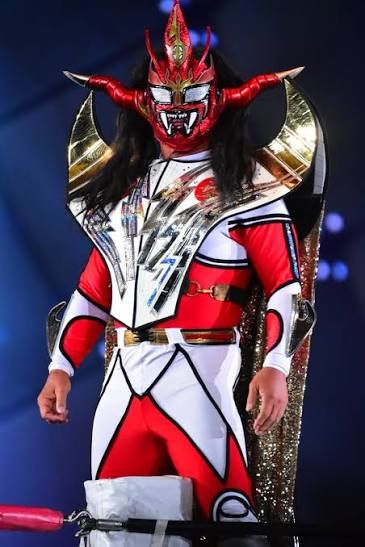
  • Jushin “Thunder” Liger

    Part of the appeal of pro wrestling, especially as a kid, is the over-the-top characters that seem like they’ve been photocopied directly from the pages of comic books or cartoons. As a young kid, my wrestling heroes occupied similar places as Batman, the Ninja Turtles, and the Muppet Babies. Even the occasional crossover between universes was attempted. Hulk Hogan’s cartoon was a bit before my time, but I occasionally caught reruns of it on USA in the early 90s, and WCW had briefly brought in Art Barr to play “The Juicer,” a just different enough to not get sued version of Beetlejuice. What I was unaware of was that in Japan the crossover was much more common, and that their cartoon stars crossed over into the ring in fun, creative ways I could have never imagined. In 1992, my world was changed forever when I was introduced to Jushin “Thunder” Liger.


    Liger was the first wrestler from Japan I remember seeing. He came into WCW in 91, but I remember vividly his matches against and with Brian Pillman in 1992. This is my rosetta stone. Seeing Liger gave me the idea that all wrestlers from Japan were these incredible wrestlers who could do all kinds of exciting and dangerous looking moves. While I wasn’t imagining the variety that strong style, kings road, joshi, juniors, deathmatch, and shootstyle would bring me once I really dived into the world of puroresu, I didn’t even know or understand those words, but I was right.


    Jushin Liger was the title of a popular manga (comic book) that had been adapted into a popular animated series. In 1989, New Japan Pro Wrestling purchased the rights to the character in order to give it to a wrestler, hoping to capitalize on the crossover audience of young boys who were into both. This was a tactic that had been successful some years earlier, when Tiger Mask had leapt from anime screens to New Japan rings and captivated a generation with his high-flying, acrobatic style.


    I was a few years away from really discovering anime in ’92, but by the late 90s it would become one of the few hobbies that rivaled my love of wrestling for a while. The crossover that New Japan was looking for would bear its fruits at home immediately, but as the decade wore on, more and more American kids were discovering these cartoons from Japan and becoming obsessed. Just as WCW and WWF were hitting their peaks, I was watching Pokémon and Dragon Ball Z every day after school. Adolescent boys all over were going Super Saiyan and telling their teachers to suck it, and it’s fascinating to me how this was seemingly an experience Japanese boys were having a dozen years prior. It lends credence to the theory that there are no unique experiences, and I think that’s beautiful.


    Like my cartoons, I tend to prefer my wrestling from Japan. Various reasons play into it, many covered in other entries on this blog, but it’s safe to say I’ve been called a “weeb” a time or two in my life. Liger was the reason this idea was in my head. I associated Japanese wrestling with high-end in-ring work, and as I grew and became a “smarter” fan, that was what I became most interested in seeking out. While obviously Japan offers a buffet of different styles to enjoy, much of it was exactly what I want in my pro wrestling. From wild action, to bloody brawls, to epic title matches full of 2.9 kickouts and neck trauma, the seed was planted by Liger. If I hadn’t seen him,this blog might not exist, or you’d be reading my Billy Gunn entry instead. Because of that moment in 1992, January 5, 2020 caused me to cry twice for moments I’ll always cherish.


    Hoping lightning would strike twice, the Liger role was given to Keiichi Yamada, a 5’7″ (supposedly, wrestling heights tend to be notoriously exaggerated) junior heavyweight wrestler who had initially been rejected from the New Japan training system due to his small stature. After a few years toiling away in Mexico, desperate to be a pro wrestler at any cost, he was accepted into the dojo and began a journey that would see him become not only a star, but the face of junior heavyweight wrestling.


    When I first laid eyes on Liger, he was like some otherworldly creature come to life. The outfit, red and white, with a dark black outline, almost as if drawn on like in a comic book. The mask, red and silver with three horns protruding, one forming a point at the top and the others stretching from either side. Silver eyes, once again with that hard black shading line making them seem like a pair of cool futuristic glasses. White fangs coming from the mouth, a gentle reminder that this is somehow a lion/tiger hybrid. He wrestled like a bird/human hybrid.


    Liger was poetry in motion, his character making him seem like he was capable of doing things that should only be able to be drawn. It’s a testament to the man playing him how often he was able to perform feats of acrobatics that defied logic, most notably his own invention, the Shooting Star Press. This is a move in which a wrestler jumps from the top rope, does a backwards somersault while in the air, and lands chest-to-chest with their opponent. The physics of doing a backwards flip while jumping forward is mind-bending to me in 2026, and it was unlike anything people had seen in the late 80s. This was a time when smaller wrestlers were treated as a novelty at best and rarely taken seriously as money-drawing wrestlers. Only in the beautifully weird world of pro wrestling would a cartoon character doing acrobatics cause something to be taken more seriously, but it worked.


    Liger became the face and booker (the person in charge of making the matches and creative decisions) of junior heavyweight wrestling for New Japan in the 90s, a time regarded as a financial and creative peak for the company. This was highlighted by the 1994 Super J Cup, which is, for my money, the best wrestling show of all time. The show was a cross-promotional event meant to showcase some of the best lighter-weight wrestlers in the world, and Liger wanted to use the tournament to make a star out of The Great Sasuke, an exciting flyer from the Michinoku Pro group.


    Sasuke had been grabbing headlines all over the wrestling world with his exciting style, and Liger knew he would be the right choice to showcase the power of that style, despite him not working for the company. In addition to Liger and Sasuke, the tournament would feature a who’s who of the top smaller wrestlers, including Hayabusa, Shinjiro Otani, Negro Casas, Super Delfin, Gedo (the current, as of early 2026, booker of New Japan), Dean Malenko, Black Tiger (Eddie Guerrero), and Wild Pegasus (the reason I chose “who’s who” instead of “murderers’ row” — Chris Benoit).


    Sasuke would meet Liger in the semi-finals of the tournament, and they would put on a classic that is still considered among the best work of either man’s illustrious career. Sasuke is the hot indie darling who has been lighting the world on fire, but now he’s come up against the top guy in the top company, and Liger gives the upstart no respect. Liger proceeds to begin the match by beating the stuffing out of Sasuke, much to the chagrin of the crowd, who have adopted Sasuke as their hero for the night. It’s a joy to watch a naturally beloved babyface play heel. It happens on occasion, and Liger plays the role with such ability, making the crowd hate him as he welcomes their new hero to the “big leagues.”
    Sasuke, however, has the indomitable spirit of a man who knows this is the biggest opportunity of his life. Liger is already considered the gold standard for juniors, and a victory over him would legitimize Sasuke even if he lost the final. As Sasuke starts to turn the tide, he realizes that while Liger can outwrestle him, he can’t keep up with Sasuke through the air. All of a sudden, the bar for acrobatic wrestling has been pushed even further, and its flag bearer is lagging behind. What Liger is losing in the physical department, however, he gains in the mental one. Knowing when to strike is as important as the strikes themselves.


    After a prolonged beating by Liger, Sasuke jumps to the ropes to attempt another aerial stunt, and the risk that all wrestlers take happens, he slips and falls flat on his face. Without missing a beat, Liger is clapping and gesturing at him, telling Sasuke, the crowd, and the whole world through those few seconds and movements that this guy is a sloppy loser who doesn’t belong in his ring or on his level. Sasuke gets up from the embarrassment and immediately hits Liger with a Hurricanrana to pin him and advance to the finals of the tournament. Liger had used his position to tell us all a story about bullying, trying your hardest at every turn, and, most importantly, perseverance.
    Sasuke would go on to win the tournament in another exceptional final match, but the Liger match would hold a special place in people’s memories specifically because of how Liger reacted both to the slip and throughout the entire match. So good was Liger’s performance that some theorize the slip was always scripted into the match, that Sasuke was supposed to garner that reaction to make Liger’s comeuppance that much sweeter.


    As the years passed, Liger became a legend wherever he went, a favorite for independent promotions all over the world to bring in to guarantee both a crowd and an excellent match. His home remained in New Japan, however, and he spent the 90s as the undisputed ace of his division. As the years passed, he would begin to phase himself downward in order to give new, younger wrestlers their opportunity to shine and become stars in their own right. It’s so rare for a booker, especially one who is still actively wrestling, to put their ego aside and do what must be done for the company and the sport as a whole. Liger understood that the ecosystem he had been lucky enough to help create would collapse if he were the only one allowed to be at the top of it.


    Liger never had any issues losing or looking weak. If anything, he probably could have been a bigger star had he chosen to run through opponents, not sell for them, beat them, and always win. But this wasn’t just about him. It was about every other 5’7″ or smaller kid who assumed wrestling wasn’t for him because he was too small. Liger had been broke and nearly homeless while living in Mexico, and he knew that in order to help smaller wrestlers get the breaks they deserved, the perception in the eyes of fans and company higher-ups had to completely change. He made sure that the next generation of juniors wouldn’t suffer the way he did due to rejection over size. That selflessness endeared him to his peers and created a world much safer and better than the one he came up in.


    As the 2010s wound down, Liger was in his mid-50s, and while the mask and bodysuit helped to hide aging from our eyes, his body was feeling every bump and bruise from the last 30-plus years. He announced that he would be retiring at the January 2020 Tokyo Dome, and spent the last year of his career on a retirement tour that took him all over the world to say goodbye to the fans who had loved him throughout the years. These tours have started to become more common as the greats of the past have finally been put in a position to be appreciated for their accomplishments as a whole, rather than for a specific match or moment. It’s a great way to get old fans back for a show and to remind adults why they loved it in the first place.


    I love these tours and think more people should be doing them. It’s a chance for the person to be honored, appreciated, and, most importantly to them, to make a few last big paydays before their main source of income is gone. We as fans also get our chance to say goodbye in person at least once and reflect on what that person has meant to us. So much of pro wrestling is aimed at the ever-elusive “casual fan” who kind of likes or used to like wrestling but doesn’t really follow it. The assumption is that hardcore fans like myself will always be around, and companies should be focusing on growth instead of appealing to the people who are already converted. A retirement tour is an exercise in being a hardcore fan, and it’s nice for people like us to have something in the business we all love so much.


    Every city Liger hit in Japan had a memory attached to it. A match, a moment that meant something to those fans from previous trips over the last 30 years. Every stop in Europe and North America had people just like me who had discovered his work at some point and had their entire world opened up. This is our chance as fans to give these people their flowers while we can, by buying a ticket, a picture, a shirt, whatever. Liger was the first Japanese wrestler a whole lot of us ever saw perform. Him finally riding off into the sunset felt like a part of us was leaving with him, and it meant all that much more when I heard his music hit at the 2019 New Japan/Ring of Honor show at Madison Square Garden. It was my chance to see him live and scream his name out like I had always wanted. A simple entry in a battle royal, nothing spectacular or impressive, but it was him! The reason I was sitting in that seat, and took the trip in the first place was because of how he made me feel 27 years prior and I got to see him live, hear the song, scream his name.


    As much as the child in me was overjoyed that day, the adult understands the retirement all too well. I can’t imagine what that many years of pro wrestling does to your body. I’ve got 20 years in restaurants and my knees and back have a dull, constant pain running through them. I don’t see retirement as something I’ll be doing any time soon, if ever, and I worry about how my body will hold up when I’m in my 50s, 60s, and beyond (hopefully). As my clock ticks down to 40, I understand the athletes of my youth more and less, more because those aches and pains affect me too, and I never could have expected how it would feel despite all the warnings it was coming; less because if I hurt doing my job, how the hell has anyone ever done professional wrestling (or any athletic endeavor, honestly) for any extended period of time. It breeds a whole new type of respect and awe for their ability to take care of themselves and not crumble into dust. I took about 3 bumps in a wrestling ring in my 20s, and that was probably 2 too many. Seeing their ability makes me want to at least make it to 50 with minimal pain.


    On January 4th and 5th, Liger retired at the Tokyo Dome in front of a stadium full of adoring fans. He got to work with some of his greatest opponents and rivals in an 8-man tag on the first night, and tagged with longtime friend and rival Naoki Sano against Hiromu Takahashi and Dragon Lee on the second night, putting a bow on a career unlike any other. As I watched him say goodbye to the fans in attendance, I felt the tears coming down my cheek, saying goodbye to the man who changed everything for smaller wrestlers. Saying goodbye to my rosetta stone.

  • L.A. Park

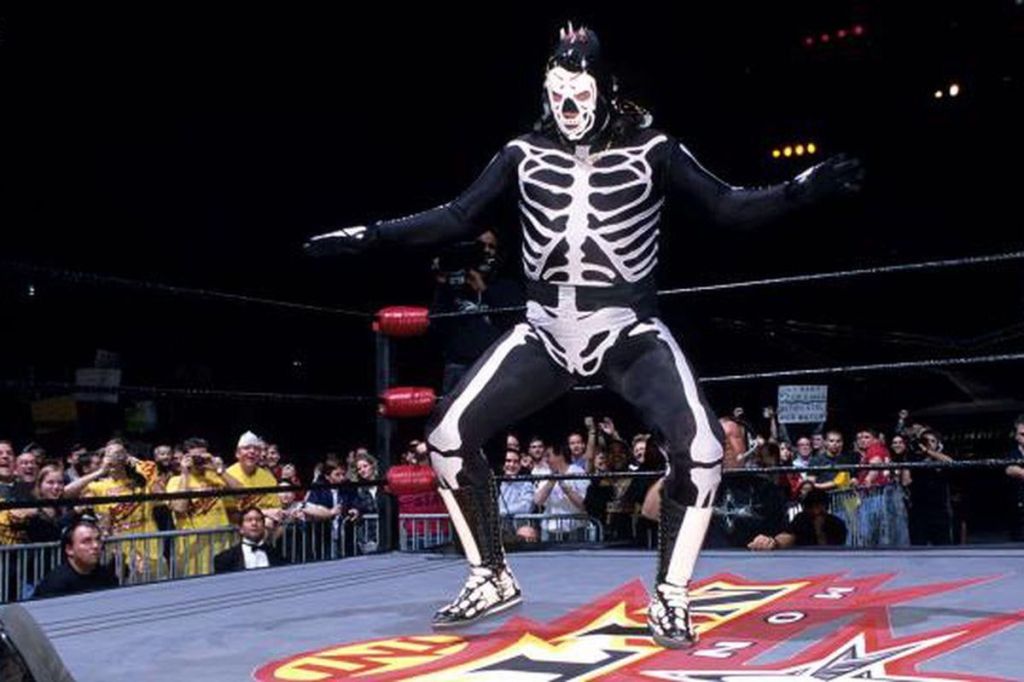
    Like many people my age, I have WCW to thank for my introduction to Lucha Libre. The When Worlds Collide show in 1993 was a landmark show in that it let American audiences experience the newly formed and red hot AAA promotion. Once the Monday Nitro era began, our TV screens would be full of a menagerie of characters flying around weekly. The style was entrancing, but even more than that was the wide array of colorful masks and outfits, which made them seem like real-life superheroes. Even as a kid, though, I always preferred the darker side of things, so when La Parka, now known as L.A. Park, showed up on Nitro as a dancing skeleton, I knew this was a guy I was gonna like.

    Park has, hands down, the coolest look in the history of pro wrestling. Maybe some of those heavily made-up Joshi heels from the 80s come close, but the skeleton look is in equal measure spooky, silly, and scary. The outfit is made by the performer, however, as we would learn in the early 2000s when legal issues necessitated the slight name change. The charisma of Adolfo Ibarra was what shone under the mask. The dancing skeleton playing air guitar on a chair, to the delight of the thousands of kids in the audience in WCW or in Mexico.

    Luchadors have an especially difficult task trying to perform and emote while under a mask. It can be difficult to sell pain or elation without your face visible, but go too far into pantomime and you’ll be criticized for looking silly or over the top. Park has always been able to have a foot in both worlds by being so outwardly goofy during entrances, then becoming a bloodthirsty madman once the bell rings. In contrast to the notions many have about Lucha Libre, Park does very little flying; his best stuff comes when in a fight. Park wrestles like the most dangerous uncle in a bar fight. A sense of realism and hatred permeates his feuds when he’s at his best. While the kids laugh and dance at his antics, his rivals must think this skeleton is death itself, come to collect.

    His dance, especially while holding a chair to strum on, was a hit that every boy on the playground did at some point. I used to do it as a kid to celebrate anything, and did until I discovered the RVD point. He was a blast to play as or against in the WCW Revenge video game. I have so many memories of using the reverse taunt to make Dean Malenko, The Giant, Hogan, and everybody else do the La Parka dance. While none of them quite had the swagger of the skeleton, Raven came close. As I grew older and a little more bloodthirsty, the dark juxtaposition of the gimmick grew on me as well. Literally death itself, ready to fight you, make you bleed, and drag you to hell, but also down to jam out and do a silly dance.

    Such is his character’s charisma that it famously worked even when he wasn’t the one behind the suit and mask. On the July 7, 1997 edition of Monday Nitro, we were shown a video package highlighting LA Parka, most notably his proficiency with a chair. He then went on to have a match against Randy Savage, a name so notable that even my mom knows him. This would normally be a quick squash match, but Park moved out of the way when Savage climbed the ropes to hit his signature diving elbow. Out of nowhere, Park hit Savage with a… diamond cutter? And pinned him! “La Parka” then took off his mask to reveal he was in fact Diamond Dallas Page, who had been feuding with Savage.

    While technically the match was worked by Page, Park deserves some credit as the fount of charisma who DDP knew the fans would be receptive to. He wasn’t as high on the pecking order as Rey Mysterio, Psicosis, or Juventud Guerrera, but his dancing, antics, and iconic look made the audience receptive to the idea of him beating Savage, even if it wasn’t actually him.

    I remember the feeling of pure shock when “La Parka” stood up, but the diamond cutter was the tip off. I briefly did the kind of mental logic leaps that only a kid would make. DDP must have paid LA Parka to hit his move and send a message, but the reveal made me leap off the couch in excitement. Of course it was DDP, it all made sense to me finally. Still, I liked the feeling of the world where La Parka just beat Savage straight up, even if if only lasted seconds, it’s one that has resonated for years.

    DDP would only occupy the gimmick for a night. When he returned to Mexico after the end of WCW, Park found that he had spawned imitators in his absence. His home promotion of AAA had been promoting a man as “La Parka Jr.” for a number of years, but when Park jumped to rival CMLL in 2003, AAA dropped the Jr. and he began wrestling simply as “La Parka.”

    This was technically legal because the owner of the promotion owned the rights to the gimmick, so it was within their rights to put whoever they wanted into the suit and say, “dance, skeleton, dance.” This was when the name changed to “La Authentica Parka” or L.A. Park full time. I have tried to use the Park name as often as possible to make sure people know I am referring to the original.

    This was unfathomable to me, as my only frame of reference to something like this was the brief period in the mid 90s where Rick Bogner and Glen Jacobs (the future Mayor Kane) played “Razor Ramon” and “Diesel” in a sadly pathetic attempt to get back at Scott Hall and Kevin Nash for leaving. In my eyes, if you were just another guy playing the same character, you were a worthless copy, with the exception of Davey Richards playing the Dynamite Kid.

    This new La Parka just stepped right into the role, and for a generation of fans younger than me, he IS the real La Parka. They say time heals all wounds, and by 2010 Park was ready to come back to AAA and make some money. Time heals, but a big payday certainly helps speed that process up, and Park is a man who is about his money first and foremost.

    In true pro wrestling fashion, Park made sure to get paid twice to give up the name for good. At Triplemania (AAA’s big show of the year) in June 2010, Park won over La Parka in a match for the rights to the name. The match, however, was marred with all kinds of illegal moves and interference. So much so that the commission that oversees Mexican wrestling overturned the result and ruled that both men must keep their respective names. This is an actual governmental organization ruling on a pro wrestling match, which sounds crazy, but also shows what a cluster it was. On July 4, Parka would defeat Park in a rematch, finally putting an end to the feud and the confusion over the name.

    Park would become one of many legends in the 2010s who used their final years of ability to cash as many checks as possible. It’s an unfortunate necessity in a business without pensions or retirement plans. As the body breaks down, the aches worsen, the medical bills rise, and the earning window narrows. For many, wrestling is all they’ve ever known. There is no safety net waiting on the other side.

    Park always understood what his moneymaker was. It was so good that two versions had been able to thrive in the same ecosystem. It was the gimmick.

    In lucha, there is one last payday everyone knows is coming: the mask. As contemporaries slowed down, many cashed it in, losing a mask match and standing bare-faced before a packed arena for one final emotional payoff. It is ritual, tradition, and commerce wrapped into one. Sometimes it’s legacy. Sometimes it’s survival. And sometimes, unless you’re Dr. Wagner Jr. and look like a sexy grandpa, it’s simply the end of the line.

    In the late 2010s, Park found a new dance partner, a young, hot, fiery wrestler who had a reputation and a temper. Rush came into Park’s life at the twilight of his career and ignited a rivalry that took them all over Mexico. The two engaged in singles and tag matches all over Mexico, with their names littering indy posters across the country and drawing big crowds almost every time. Rush works with an intensity and edge that makes you question if he knows this is supposed to be a work. He also has a history of blowups with other wrestlers, management, and fans that makes you question if he knows this is supposed to be a work. Park, however, is always happy to dish out the punishment. 

    These two would meet in various combinations over a dozen times with their singles matches always standing out as bloody violent affairs. They would brutalize one another all over the arena, much to the delight of the always raucous crowds. Rush tearing at Park’s mask, making sure the crowd could see him bloodying their idol. Park never says die, and pays Rush back in spades. The bouts would always feature plenty of shenanigans and interference in order to protect everyone no matter who actually won or lost the fall. This was made easier when the allies of the two men would join in for tag team and trios matches and someone other than the main two could take the loss.

    As his body starts to go and his gut expands, he has evolved into more of a bar-room brawler. Your drunk uncle who can take your best shot and give one right back to you. This has made the feud between the two a massively heated affair anytime they cross paths. They go at each other with a viciousness and ferocity that makes fans go rabid with excitement. With the popularity of the feud, most people assumed that they were heading to a big Mask vs Hair match at some point that unfortunately never came.

    Park always held out, still working to this day with his mask. Maybe after losing the battle over the name, he decided he would never lose the face. He was the originator. Maybe he wants to be buried in it. The kids who watched him in 1997 grow up and have kids of their own now, they pass those memories down. The mask makes him ageless. To an 11-year-old, he’s still a superhero, to a 40-year-old, he’s still the same as they remember. That’s the power of it, the gimmick outlives the body.

    In lucha, great masks rarely disappear. They get handed down, revived, rebooted. The character survives even when the man underneath can’t. Just ask the 47 Huracan Ramirezes. When you originate something like that, no matter who imitates or profits from it, they can’t take that away from you. You’re the first, and while you won’t be the last, you can decide how you get to tell your story.

    Maybe he’s holding out for a number no promoter can meet. Maybe it’s pride. Maybe it’s just good business. Whatever the reason, as long as the mask stays on, L.A. Park never has to become just another aging wrestler on a poster. He may be slower now. He may be bigger. The matches may not be what they once were. But when that music hits and a skeleton starts dancing with a chair, it can still be 1997 for a few minutes. As long as that mask never comes off, in some small way, it always will be.

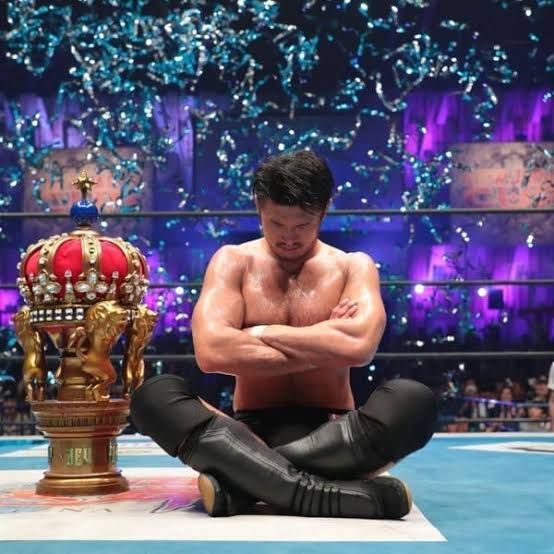
  • Katsuyori Shibata

    The early 2000s were a weird time for pro wrestling. As the Attitude Era died out and people started to wander from the sport of kings, a new combat sport took rise in Japan and the United States, and before you knew it every young man knew someone who practiced Jiu Jitsu and that R’s are pronounced like H’s in Portuguese. Mixed Martial Arts had been around, but the early 2000s saw the rise of PRIDE Fighting Championships in Japan. This was also around the time that the Fertitta brothers bought the UFC in America and began its ascent into the mainstream of American sports. Lots of us left pro wrestling behind for MMA, myself included. Though never fully out, I was absolutely more interested in MMA for a large portion of the 2000s than in most pro wrestling. I’ve always craved violence that felt real, scripted or not, and PRIDE especially had the pomp and bombast of pro wrestling baked into its core.

    It wasn’t just us fans who left, though. The rise in popularity meant that a number of young and established athletes who had the skills but chose wrestling as a means of making money now could dream of “what if.” Some even decided to fight in addition to doing pro wrestling, especially in Japan, where the two share a much closer lineage. While the heights of the late 2000s UFC were cool, nothing could satisfy me like pro wrestling, and by the early 2010s I was less enamoured with MMA and really getting deep back into pro wrestling. My story isn’t unique, but the timing meant I never really got a good look at Katsuyori Shibata until he came back to New Japan in 2012.

    I would have seen a few of his matches by that point by watching New Japan shows from the early 00s, and I had seen him teaming with KENTA in Pro Wrestling NOAH in the mid 00s, but by 2007 he had left pro wrestling completely to focus exclusively on MMA. His return at the 2012 January 4 Tokyo Dome show would be my first real chance to watch him in real time in a promotion I was watching most shows from. He would spend the first part of his return teaming with the legendary Kazushi Sakuraba. Sakuraba was a pro wrestler who had gone into MMA and made himself a national hero in Japan by defeating four members of the vaunted Gracie family, the originators of the Brazilian Jiu Jitsu that has become the basis and backbone of MMA, most famously defeating Royce, the star of the original UFC, after a bout that lasted well over an hour.

    I had always appreciated Shibata’s style and knew he had been pretty good before he left. His match against Jun Akiyama in the short-lived Big Mouth Loud promotion was one of the best matches of 2005, an absolute dogfight that saw both men hit each other so hard that MMA suddenly seemed tame by comparison. In a real fight you can tap out and leave, but in pro wrestling you have to take it for as long as you’re supposed to, and these two brought genuine-seeming hatred into their classic bout.

    His return to New Japan couldn’t have come at a better time. They had just begun to stream some of their shows live, and this opened up a whole new way for people to consume this stuff besides the sketchy download sites and torrents we had been used to. New Japan would go on to be the critical darling of the 2010s, racking up star ratings and awards both domestically and all over the world, thanks in very large part to the immense quality of the in-ring work. The company had one of the deepest rosters ever, and all of them were going out and performing at a pace that none of us had ever seen before. Shibata was one of those ready for the chance to show that not only did he not lose a step while gone, he was better than ever.

    He approached every match as if it were a fight, predetermined or not. Shibata was the perfect encapsulation of the old wrestling adage: “You might not believe it’s real, but you’ll believe I’m real.” Shibata worked the “Strong” style like a fanatic disciple, every chop sounding like an explosion, every kick landing with a sickening thud, and every headbutt making you cringe in fear while you scream in excitement. Shibata approached the ring with a seriousness uncommon even in the more sports-oriented New Japan. His plain black trunks and boots were reminiscent of what the young lions on the undercard were forced to wear before they “graduate” to colorful outfits and are allowed to develop personalities. Serious WAS his personality. Even his nickname, “The Wrestler,” seems somewhat plain—of course he’s a wrestler, he’s in a wrestling promotion. This is a statement to everybody, though: he isn’t A wrestler, he’s THE wrestler. A reminder of what he was, wasn’t, and now is again.

    The “New Japan era” gave me dozens of moments and matches that I hope to remember forever, but my two favourite matches both involved Shibata. 

    On August 4, 2013, he took on Tomohiro Ishii in the G1 Climax (their yearly round-robin tournament). This was the first time the G1 could be streamed live, and I happily plunked down over 130 dollars to get the whole package. It was already worth it a few days in, with a number of matches that left me in awe and wanting more.

    I had a few hours to kill before work and brought that morning’s show up on my tablet while I had a coffee at the local Second Cup (why a Canadian coffee chain had a location in South Carolina is beyond me, but it was close to my job at the time). Immediately the two charged at each other, and I made an audible noise that caused the entire shop to look my way. I played it off as best I could as a bad cough, even going through the theater of asking for a glass of water. I knew immediately that this was the kind of match I couldn’t watch around other people. I left and went behind the building, sitting in a shaded area out of the sunlight so I could see, already sweating in the South Carolina heat, close enough to still pick up the WiFi.

    The next 13 or so minutes will be forever etched into my mind. They fought at a pace so blistering that it didn’t make sense—two men throwing everything they had at one another, an absolute war. Ishii was lower on the pecking order in the eyes of the fans, but had just scored a massive upset over Hiroshi Tanahashi two days prior, and if he can beat the top guy in the promotion he can beat anybody. Ishii wrestles with a heart that makes him seem a foot taller than he is, the ultimate underdog to the point that he very quickly would stop feeling like one and be acknowledged as one of the best wrestlers in the world. Shibata was the technique to Ishii’s heart, coming in with the pedigree and prestige of someone near the top of the card—a true, trained fighter who had the ability and skill to put away his opponent, puncher’s chance be damned.

    They tear into each other with elbows and forearms and some absolutely brutal-looking headbutts, but neither man is willing to give an inch. The crowd is also at a fever pitch, yelling and screaming like Ishii was John Lennon or Harry Styles. The same fervor I was feeling, but a packed Korakuen Hall is a better place for that energy than a Second Cup. Both men know exactly when to sell and when to shrug it off and ask for more. They hit big moves on one another, and both men are able to kick out at one at various points in the match, showing each other that they won’t be denied. 

    People often find these spots contrived, but to me they tell the story of masculine pride and ego.

    To take the pain, smile, and ask, “Is that all you got?” is probably not the smart decision to make in the context of a fight, but it shows a toughness that makes the audience respect you and a willingness not to fold under pressure. If everyone has a plan until they get punched in the face, what better way to show that you still have a plan than by taking that punch, smiling, and delivering a haymaker of your own? These exchanges show the audience that these are hard men willing to fight in order to win. This isn’t an acrobatics show or a wrestling clinic; this is a bar fight between two tough bastards.

    Kicking out at one serves a similar purpose. Taking a big move and not even allowing your opponent the satisfaction of the “standard” two count is a way to tell him that he may have you down, but you’re far from out. It also denies the person kicking out another second of rest, a chance for one more breath. They don’t care about the breath, though, because beating their opponent has become more important than air. These tropes can of course be overdone, and it takes the right participants to really make magic. New Japan itself would fall victim to it over the coming years, but the magic was there in such large amounts that day the match could have been Houdini vs. Copperfield.

    If the Ishii match filled me with excitement and joy at the level of violence, Shibata’s April 9, 2017 match against Kazuchika Okada would fill me with a sense of fear that I hope to never experience again. After a number of years in the upper midcard of New Japan, Shibata had earned an IWGP World Title shot against Okada, the unquestioned ace and top star of the promotion. This was his chance to finally show he belonged at the top of New Japan, to show the audience and the higher-ups within the company that he was committed to New Japan and that his style of serious, tough, no-nonsense pro wrestling was the superior one. The two would engage in a war that contrasted 2013’s short brutality with nearly 40 minutes of chess disguised as a fight.

    Shibata came at Okada with everything he had, using his superior technical skills to wear down the champion. The crowd in Sumo Hall was molten as they chanted his name. This was finally the moment his fans had been craving since his return to the company; the title was well within his grasp. Okada was the champion for a reason, though, and seemed to have an answer for everything in Shibata’s arsenal. After a marathon session of chops, slaps, submissions, grappling, and reversals, Shibata did what came naturally to him, and in a desperate attempt to finally achieve the glory he had seemed destined for years ago, he threw a headbutt to Okada.

    Why did he have to throw that God damned headbutt?

    The crack of skull on skull makes a sound that I’ll never forget as the crowd gasps. We almost immediately get a visual of a trickle of blood running down Shibata’s head, a final visual of a warrior at his greatest triumph and worst defeat. Shibata emptied his clip, but somehow, against all odds, Okada refuses to go down. A few minutes after the headbutt, Okada hits his signature Rainmaker and Shibata stays down for the three count.

    I was overwhelmed with disappointment upon watching it live, but also positive I had just seen maybe the best match in professional wrestling history. Upon waking up the next morning, I learned that I had possibly witnessed a tragedy in real time. That sick-sounding headbutt had caused a subdural hematoma, a buildup of blood on the brain, and temporarily paralyzed Shibata, who had collapsed backstage almost immediately after the match. He was immediately rushed into emergency brain surgery, and at that point his chances for survival were grim, let alone wrestling. All of a sudden I was overwhelmed with a different feeling of disappointment, one in myself.

    I thought the headbutt was one of the coolest spots of all time when it happened. I leapt off the couch and stifled a scream so as not to wake my wife, and watched the rest of the match standing on my feet. Shibata throwing one last desperate attempt to put down the champion was the perfect move for his character and reaffirmed everything I love about him and his style of wrestling. I will always have a soft spot for somebody with more balls than brains, and the headbutt showed exactly that: desperation, need, passion all overriding logic and safety in order to achieve the ultimate prize in the sport. Inject it into my veins!!! That spot got my adrenaline pumping and reminded me why I love pro wrestling so much at 5 a.m., and by noon I felt responsible for the possible death of who may have been my favorite wrestler in the world at the time.

    Pro wrestling is dangerous. We all know this, and only the most stubborn outsiders still tell tales of ketchup as blood and wrestlers never being in any danger. That said, the style that has always excited me the most has been a highly physical and dangerous one. From shoot style to deathmatch to the head drops of ’90s All Japan, I get excited when it comes across as “real.” This lends itself, unfortunately, to a lot of people I admire suffering horrific consequences. In addition to Shibata, the last decade has seen high-profile long-term injuries with Shinjiro Otani and Yoshihiro Takayama. 2009 saw the tragic in-ring death of Mitsuharu Misawa, another all-time favorite. 

    This is before we get into the effects of head trauma and CTE on pro wrestlers. Suicides abound in the wrestling business, and perhaps the most notable pro wrestling criminal case was yet another one of my favorites, Chris Benoit, now most notable for the murder-suicide against his wife and young son.

    I can’t shake the feeling of complicity. In moments like these, when I think of the violence I’ve cheered for, I feel dirty. I still do, sometimes. My idealized version of wrestling is built on real violence, and in the worst cases, it costs people their lives and their livelihoods. Reconciling that with myself is hard. It’s not that I don’t care. I care too much. And that’s the moral dilemma that has kept me up some nights. I know I’m not going to stop watching, because I can’t help what I like, but I know there has to be a better solution than donating to GoFundMe pages or crying when I rewatch Shibata’s headbutt.

    Shibata would eventually recover, making an appearance that August and telling the audience, “I am alive, that is all.” Another moment that choked me with emotion. He would regain his strength and become a coach for New Japan, training and guiding the next generation in his style and philosophy. By 2021 he would return to the ring in a limited capacity, and today he is a regular member of the AEW roster. 

    It was truly a miracle, and a testament to Shibata’s strength and determination that he can seemingly wrestle a safer and smarter style that allows him to continue to do the thing he loves the most. I don’t think that necessarily absolves people like me from criticism for our desire to see the kind of wrestling Shibata used to do. I just don’t know what to do about it. Sometimes there are no easy answers. Sometimes you are alive, and that is all.

  • Daisuke Sekimoto

    Most people in the world get up and go to work every day, do their job, and go home. Certain dedicated folks become the example: always showing up to work, giving their best, and, in a just world, being rewarded handsomely for a job well done. This archetype has become so common that we’ve started to apply the term “lunch pail guys” to certain athletes because they seem to represent that head-down, hard-working mentality that has become the exception rather than the rule in pro sports. This kind of guy is almost antithetical to professional wrestling. An art form that requires not only the physical but the emotional, and where loud and brash personalities dominate the landscape, hardly seems like the place for a guy who shows up, does his job better than anybody, and leaves the pomp and circumstance at the door. Thankfully, Daisuke Sekimoto is not any ordinary wrestler.


    In 2026, fans have become enamored with a certain type of body. The days of needing to be 260 pounds of chiseled muscle are over, but so are the days where a wrestler could just look like your fattest, drunkest uncle. Many different types of wrestlers and bodies exist these days, and it’s a great thing that people are afforded the opportunity to prove themselves based on talent rather than looks. However, it’s become obvious over the last few years that for a certain section of the fanbase, MEAT (and I don’t mean Sean Stasiak) is back on the menu. We’re seeing a renaissance of burly men built like refrigerators, with chants of “meat” echoing through arenas anytime two guys with a waist size above 36 face off across from one another, guys who are often as wide and muscular as they are tall.


    Big E seems like the flashpoint for this particular resurgence in our collective appreciation for these kinds of guys (and was a prime example himself) when he coined the phrase “big meaty men slapping meat.” This was in reference to him wanting a match with Goldberg, but he spends the rant talking about how that’s his favorite style of wrestling. I have to give it to Big E, because it’s mine too, and in the six-ish years since that quote started making its way around the internet, more and more of us have come out of the woodwork to proclaim our affinity for strong, physical, realistic-looking pro wrestling. If Big E is the apostle Paul, then Daisuke Sekimoto is our Jesus Christ.


    Sekimoto spent almost all of his career plying his trade for Big Japan Pro Wrestling, a smaller company in Japan that never had the money or production values of the big promotions but was able to find its niche and survive for over 30 years. Big Japan is notable for having two distinct styles that dominated their events. There was the deathmatch division, where some of the masters of the style took it to new, innovative, and terrifying heights. There was also the Strong division, full of the hard-hitting, meat-slapping violence that I love. Discovering a promotion that specialized in my two favorite kinds of wrestling was like manna from heaven. Sekimoto worked in both divisions, but he was always more of a Strong wrestler, and by the late ’00s he would be almost exclusively in that division, usually in main events. This didn’t stop him from breaking out the occasional deathmatch tactic, and more importantly, it made him tough enough to withstand anything his opponents could throw at him. What’s a stiff chop when you’ve taken a light tube? What’s a goon to a goblin?


    This was the era when I was downloading any Big Japan I could get my hands on thanks to the download and torrent sites of the time. Sekimoto grabbed me, and I was seeking out anything with his name attached to it. Despite only standing 5’9” (and that may be generous), he wrestled with the intensity and drive of someone a foot taller, throwing chops that sounded like shotgun blasts, suplexes that seemed horrifyingly dangerous, knowing when and how to sell despite his character, and carrying an edge that felt effortlessly cool. Sekimoto was everything I wanted to see in a pro wrestler.


    Sekimoto’s matches would often follow a deceptively simple rhythm, and that’s where the magic lives. There’s a moment early on where he plants his feet, squares his shoulders, and invites his opponent to hit him as hard as they possibly can. This is sometimes called “Dumb Jock Wrestling” and for good reason. This is a challenge, a meathead who knows he can take whatever is thrown at him. The chop lands, loud enough to make the crowd wince, and Sekimoto barely reacts. He exhales, nods once, and fires back something twice as heavy. The crowd starts to buzz, not because something flashy happened, but because they understand what kind of night they’re in for. Sekimoto doesn’t rush, doesn’t panic, and doesn’t look for shortcuts. He keeps pressing forward, an unrelenting force of nature, the kind that saps both men’s energy with every repetition. By the end, his opponent looks spent in a way that feels real, like someone who’s just worked a full shift and realized there’s still an hour left on the clock.


    I was vaguely aware of the Japanese tendency to stay with one company, and as much as I would fantasy-book him against the big stars and best workers of the day, I knew it was probably a futile exercise. While this has started to change in recent years, often where you start in Japan is where you finish. There’s a loyalty to the employer that isn’t seen here in America, especially in the cutthroat world of pro wrestling. Sekimoto would occasionally tour Europe or America, and he was highly in demand on the Japanese indies. These excursions were a glimpse into what really drives Sekimoto, and that was work. He showed up everywhere and worked all over the world. Always looking ready in his plain black boots and trunks, Sekimoto comes off like he doesn’t have time for frivolities like flashy costumes and showy technique. He approaches the ring like a man who wants to finish work early so he can go eat a steak.
    He became a reliable presence on small indies throughout Japan, someone people would pay to see because he delivered every time. The kind of guy who could reliably add a couple hundred tickets to any card, but only a couple hundred tickets. Big Japan itself is only so big, usually sitting in the bottom half of the ten biggest wrestling companies in Japan at any given time. Sekimoto became a king of the small room, the kind of guy who feels destined for somewhere much bigger. Seeing Sekimoto on a small indie has to feel like seeing a legend in a tiny venue. I can only imagine the denizens of Shin-Kiba 1st Ring felt the same way I did seeing KRS-ONE at a bar attached to a bowling alley.


    As much as I wished he would end up somewhere else, to have a chance to be the star I knew he could be, as big as anyone in Japan, he wasn’t ever going anywhere bigger than Big Japan. The loss of a career that could have been looms bigger than any single loss on a booking sheet. He accepts his fate, the crowd accepts it, the booking makes sense, and life moves on. These are losses that don’t diminish him in the ring, but they quietly reinforce the idea that he exists to sustain the ecosystem rather than transcend it. What makes that limitation sting is how clearly he understands it. Sekimoto wrestles like someone who knows exactly where he stands in the hierarchy and has made peace with it. There’s no sense of chasing stardom or trying to reinvent himself to fit the moment. He doesn’t beg the audience to see him differently, and he doesn’t rage against the role he’s been given. He just keeps working, because the work itself is the point. In a business obsessed with becoming something more, Sekimoto has spent his career being exactly what he is, and paying the price for it.


    Sekimoto is a small-scale entertainer, and while that may sound like a slight, it isn’t meant to be one. He gets to pay his mortgage with his art, and that’s a luxury many of us dream of but very few get to live out. Living in a tourist town has given me the opportunity to meet a lot of people who fall into this category, and the one commonality among all the athletes, musicians, dancers, and actors is that they hustle hard because their art usually isn’t enough. These people give private lessons, coach, drive Lyft and DoorDash, and do anything else they can to make ends meet, but they do it because at the end of the day, they still get to do the thing they love most. Sekimoto was hustling on these indies, but like the artists I’m so lucky to know, he never dogged it. He made sure everyone who paid to see him got his best effort, and hopefully he made a lot more on Polaroids and T-shirts than his booking fee.


    Professional wrestling loves to dress exploitation up as passion. It tells you that if you really love this, you’ll sacrifice for it, grind through pain, stay loyal, and trust that things will eventually work out. That story is convenient for the people making money and devastating for the people doing the work. Passion becomes a leash. Loyalty becomes an excuse, and anyone who questions the arrangement is framed as bitter or ungrateful rather than realistic.


    Sekimoto did everything the mythology of wrestling tells you to do. He stayed. He worked. He carried shows, trained bodies, anchored cards, and made companies look more legitimate than their bank accounts suggested. In artistic terms, his career is unimpeachable. In economic terms, it’s a warning. Big Japan needed him to survive, but when survival itself became shaky, Big Japan simply couldn’t offer what was necessary to stay afloat. The quality of his work never dipped, yet the stability attached to it eroded anyway. That’s not a failure of effort, that’s capitalism functioning exactly as designed.


    As time wore on, Big Japan was able to launch a streaming service like so many other promotions before them. Hopefully this could give people an outlet to watch and discover Big Japan and its style of pro wrestling. Unfortunately, it turned out that the people in Japan who wanted to watch Big Japan were already doing so, and the small but dedicated Western fanbase was iffy about actually spending money on the product. Business declined, and when COVID hit, the company came very close to going under completely. This is where art and capitalism invariably clash. A guy like Sekimoto has bills to pay, and as loyal as he’d been to his company, there was a shrinking opportunity for him to secure his future as his career and body began to wind down. We all want to be able to create, but if we can’t sustain ourselves and our families, what joy is there in creating anything at all?


    This is the part wrestling doesn’t like to talk about. There is no reward for being dependable if you aren’t profitable enough. There’s no pension for carrying a company through its lean years, no protection for aging bodies that gave their best years to the grind. The industry feeds on people like Sekimoto because they believe in the work more than the business believes in them. And when the math stops working, the romance evaporates, leaving wrestlers to make cold, practical decisions.


    Post-COVID, he once again began teaming more frequently with friend and rival Yuji Okabayashi, and now he had a partner to tear up Big Japan and the indies with. Okabayashi was a kindred spirit to Sekimoto, another short, stocky tank of a man who loved to fight physically and could take punishment as well as dish it out. The two of them made waste of all the young pretty boys put in front of them. They made the best of a bad situation by combining forces and doing what they could to keep working and keep living their dream. Sadly, by mid-2023 Okabayashi’s body had been battered too badly, and he entered a state of semi-permanent retirement. Sekimoto was back to his solo grind, a lonely warrior looking for his next chance to prove himself and collect a check.
    Eventually, Sekimoto had to look out for himself and his future. Bookings came more frequently from promotions happy to have him around. In 2025, he officially became a freelancer, no longer tied to any one company. While this was expected, he’d effectively been one in all but name for years, it still felt strange to see him fully divorced from Big Japan. Sekimoto becoming a freelancer wasn’t betrayal; it was acknowledgment of reality. You can’t pay bills with respect. You can’t fix your body with reputation. At some point, belief has to give way to survival. That doesn’t make him cynical. It makes him honest.


    Wrestling will continue to celebrate passion in public while quietly relying on people to absorb the cost in private. Careers like Sekimoto’s will remain admirable, necessary, and fundamentally undervalued. The guy gave over 25 years of his life to a company, carried it through its leanest years, and never stopped delivering. When the lights flickered, he adapted. He kept working. He stayed true to his craft. He didn’t need a belt or a spotlight to validate him; he needed a ring, a crowd, and the work itself. Today, he has a full belly, bills caught up, and a job that is also his creative passion. Not everyone gets that. Not everyone endures like he has. And maybe that’s the point: survival and artistry, labor and love, they can coexist, even when the world forgets to notice. We should all be so lucky.

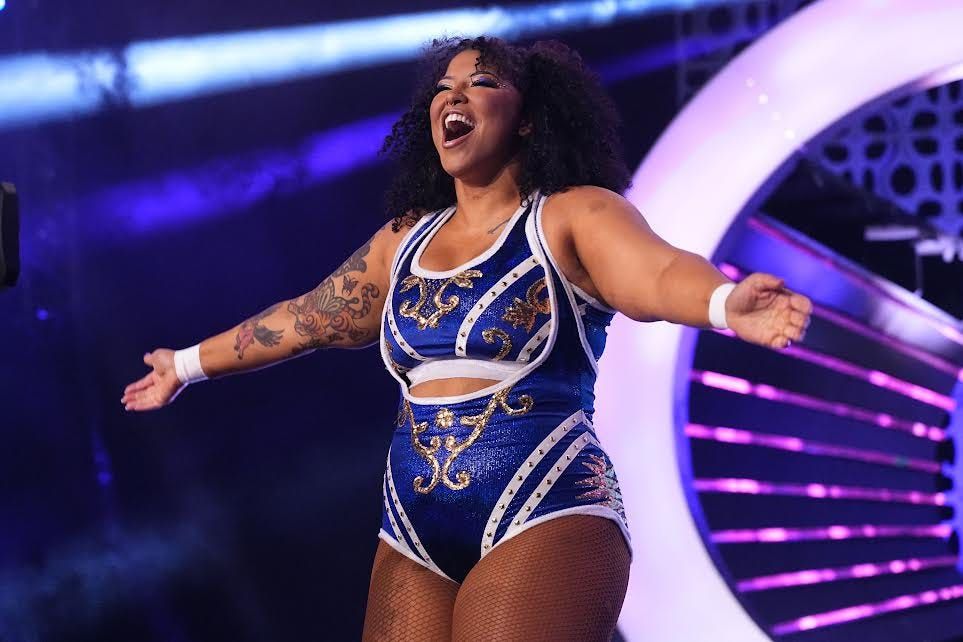
  • Willow Nightingale

    Living in 2026 can be rough. It seems as if every day a new horror awaits our eyes. Some days, it can be really hard to keep getting up and giving the world an honest chance. This goes doubly so if you work in a public-facing direction, such as retail or food service, where a veneer of politeness is expected at all times. Many of us go into work every day feeling like the weight of the world is on our shoulders, and are expected to be a ray of sunshine for people who are dealing with the same anxieties you are. The emotional whiplash of reading the news, seeing some new terrible thing happening, then having to go be happy, as if you aren’t perilously close to snapping under the pressure, can be impossible to navigate.
    When I start to feel like this, I just remember: Nothing matters. Smile anyway.
    This project is the culmination of spending most of my life obsessed with pro wrestling. It’s difficult to pare down 40 years of fandom to 40 acts, especially when you’ve consumed as much wrestling from different places as I have. I have to be judicious with my choices because I simply don’t have the time to cover every wrestler who meant something special to me. That said, most of my list will be people who affected me in my youth, or at least those who are likely at the peak or later stages of their careers. Willow Nightingale is one of only three people on this list younger than me, and the only one I am confident has her best days ahead, despite already being so talented and accomplished.
    Willow Nightingale embodies a quality I see in so many of my millennial peers, especially those I most closely associate with: a seemingly existential dread that she chooses to combat with kindness and love, taking sorrow and forcing us to see joy.
    Her aesthetic reads like Lisa Frank at a seedy punk show in a dive bar. Even her stylized logo plays into this, with “Willow” in bright colors with stars and hearts, while “Nightingale” appears in a classic death-metal band font. This combination of cute and brutal is one that many of us have adopted in adulthood. The folks with colorful hair, multiple piercings, and tattoos are often the softest, most caring people you will ever meet. Sweetness and darkness living alongside each other in harmony is the calling card of our generation, and Willow personifies that our smiles are not rooted in naivete, but earned through the trials we have faced.
    Her nickname, “Babe with the Power,” is apt, as she has the size and strength that many of her opponents can’t match. Even the name is special to me: Willow was my favorite character on ’90s TV classic Buffy the Vampire Slayer, and I would eventually bestow that name on a cat when I was 19, she is still around almost 20 years later. Though she’s not in my home, she’s with people who love her and treat her like the queen she is.
    The independent scene of the late 2010s was coming off a peak a few years earlier, and while opportunities existed, they always come in smaller doses for women, especially Black women. Over the years, I’ve seen so many talented acts with “potential” who never rose above that station in the business. Potential is excellent in your 20s, but eventually it must transform into something undeniable, especially with race and gender unfortunately working against you. The indie scene is littered with people who were “next” but stalled out and never made the leap necessary to become among the best in the world.
    I first saw Willow Nightingale as part of her team with Solo Darling, “The Bird and the Bee,” in Chikara in 2019, and she immediately caught my attention. Her work in the ring was already coming together; she was powerful and held her own in matches against women and some men. Her look was there too, with that particularly charming blend of optimistic nihilism at the forefront of her presentation, a force of nature, but also of good. Like a hurricane that rains down hugs. She was someone I knew would be worth keeping an eye on, but unfortunately, COVID put us all in stasis for a while.
    When wrestling returned in late 2020 and into 2021, Willow emerged ready to take on the world and prove her place among the biggest names on the independent scene. She appeared in most of the major independent promotions across the country, including Ring of Honor (just before it was bought by Tony Khan) and some AEW Dark episodes, doing job duty for established stars.
    This hard work paid off in the coming years, as she would eventually sign an AEW contract and achieve the recognition that so many independent wrestlers dream of. Her grinding had finally paid off, but she was just beginning to show us what she was capable of.
    She would spend the next years traveling the world: Japan, Mexico, Europe, and across the United States. In the ring, she faced all kinds of competition, which helped foster a meteoric rise into the force of nature on our TV screens most weeks.
    This was the era that truly became a revelation to me. Willow played all kinds of roles: scrappy underdog against established legends, big TV star guiding younger talent, dominating monster dismantling the lesser woman before her, or a young prospect ready to show the whole world just how great she could be.
    Her 2022 match against Mia Yim for Prestige Wrestling was one of my favorite underrated matches that year. Mia, recently fired by WWE, returned to the independent scene with a chip on her shoulder, looking to prove the world wrong. Willow, at that time booked occasionally by AEW, and Ring of Honor, put on a clinic that made fans and skeptics alike pay attention. Using her size and power to dominate, Willow faced Mia’s ingenuity head-on. In the end, Mia won, but Willow showed the world she couldn’t be stopped for much longer.
    It can’t be understated how important times like these are to a wrestler’s development. Working against different people, styles, and skill levels is the best way to improve your mechanics inside the ring. It also forces creativity in structuring a match, since you never know how a crowd will react on any given night, anywhere in the world.
    There’s something special about this portion of every wrestler’s career, where they seem to jump into another stratosphere—from “good” to “one of the best.” It’s why I love independent wrestling. So many people flirt with greatness but lose what made them special or never get the chance to hang with the best. Good is often the enemy of great, and far too many stall at simply being good because life intervenes. Willow got over that hump, proving she belonged on everybody’s lists. Seeing someone with potential become something more is rare, and therefore sweeter.
    It’s like when a band you discover on Bandcamp suddenly plays the big festivals and lands a spot on Conan. We see early potential, and when it’s realized and surpassed, it feels like we were, in some small way, part of that success. When you’re a fan, their failures hurt worse, but their successes are that much sweeter. Willow was no longer a well-kept secret or the “next up”, she was the best and most entertaining woman in professional wrestling.
    This is where I reveal my inherent bias: I can’t see Willow without thinking of a powerful, beautiful, alternative Black woman—my wife. So much so that I timed this article around her birthday. I know I’m reading parts of my own life into Willow, but that doesn’t lessen the truth of what she inspires in me. What is fandom, and what are heroes, if not people who shape your life choices and the way you see the world? While I was initially struck by the physical similarities, the core is much deeper than skin.
    I first met my wife nearly 21 years ago, and the attraction was immediate, so immediate that I pursued her while I still had a girlfriend. That turned out poorly, and a couple of months later, I had no girlfriend, and I was persona non grata to my future beloved. Six years later, through a mutual friend, we reconnected, and the spark was still there. It immediately felt like the six years apart had been the biggest mistake of my life.
    Within months we were officially dating, and I knew I had found my person. Her intellect, wit, beauty, and heart were no match for my cynicism and self-doubt. She made me a better person, more compassionate, more aware, and more willing to give and receive love.
    I spent my life being told that marriage was hard work, but it turns out that when you like your partner (not just love them, but actually like them), it’s one of the easiest things in the world. The world outside our four walls can throw anything at us, but inside is always easy because we have each other. It’s always us against the world. A tag team for the ages, a partnership no manager or interference can break. Ricky and Robert could never have what we have (Hangman and Swerve could come close though)
    The physical similarities between my wife and Willow were the first thing I noticed, but her personality is what truly made her one of my favorites. Her bright smile reminds me of my wife’s laugh, which is forever etched in my brain. Her friendships, with frenemy Kris Statlander and adorable lap dog Harley Cameron, mirror my wife’s amazing ability to be friendly to everyone, even people she may not like, and to drop everything to help those she loves.
    Her feats of strength and power remind me of my wife (a competitive powerlifter!) pushing herself to lift heavier while maintaining joy in her sport. Most importantly, her bubbly demeanor reminds me not to let the world defeat me. Through it all, Willow has helped us both keep smiling, even when it seems impossible.
    There’s something so inspiring about someone who chooses joy in the face of sadness, anger, and hatred. People our age seem to endure a new “worst thing ever” every few years, and yet we persist. Millennials should be drowning in despair over the state of the world, and yet some of us keep going. Willow is the avatar for that persistence in my eyes. She is the kind of person I want to be more like—someone who chooses to see the good even when it’s harder and harder. She implores us to “find whatever shreds of joy and hope we can to keep going and get each other through the day,” and that’s something I haven’t done enough, but Willow makes me want to be better.
    Even in the smallest moments, Willow’s philosophy shows up. When getting out of bed feels Herculean, or going to work feels like it may drain the last of your sanity, choosing to smile instead of getting frustrated is a quiet act of defiance. Sometimes it’s as simple as answering a friend’s text when you don’t feel like it, or laughing at something that went wrong instead of letting it ruin your day. She reminds us that joy isn’t something that happens to you, it’s something you carry forward, even when it seems impossible. Maybe that’s what fandom, at its best, really is: finding sparks of hope in someone else’s light, letting it guide how we live our own lives, and passing that light to others along the way.
    Nothing matters. Smile anyway.

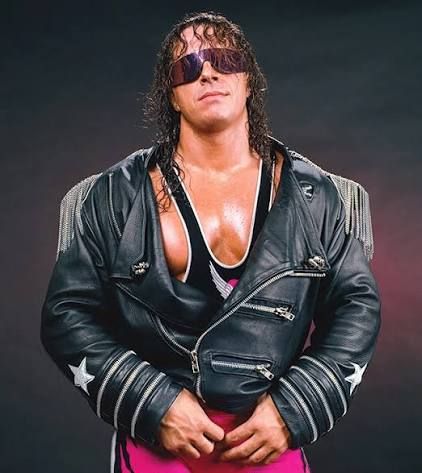
  • Bret Hart

    In 2026, it’s difficult for me to write anything positive about WWE. It is not now, nor has ever really been my preferred “style” of pro wrestling presentation, and the fact that Vince and company did their best to monopolize and drive out anything other than their own distorted vision of what pro wrestling should be, it’s hard to feel any love for this company. That’s before we delve into the horrifying and despicable crimes of Vince McMahon. Today, I try to avoid anything the company does, which is easier and easier with their cozy relationship with the fascist administration in the White House and the Kingdom of Saudi Arabia (where journalists are dismembered). Truthfully, it’s hard to go back and watch things I did like when I was keeping up with the company, knowing that everything that came on screen was filtered through the lens of a man who, at the very least, needed serious therapy, and at the most deserves lethal injection. Unfortunately, due to the way the wrestling business went, a lot of my memories are tied to them, if not directly then at least tangentially.

    I was never a WWF kid. I grew up in South Carolina, too young to see the peak of Jim Crockett Promotions, but just old enough to see almost all of WCW after they switched from using the NWA name. I discovered the WWF when Ric Flair left in 1991 and showed up in “New York.” As a 5-year-old, I was just happy there was more wrestling, even if it wasn’t the guys I was used to. As Flair found his footing in the WWF, I began to notice guys, and surely, favorites started to form. Obviously, Hulk Hogan was a big deal still, and I liked him a lot. Ultimate Warrior was also cool, but there was a guy who wrestled differently than the big stars. He did more moves, holds, and submissions that made the punches and kicks of the steroid filled giants seem silly. He wrestled with an air of confidence, dressed in pink and black, and he wasn’t even fighting for the world title (yet). He was the Intercontinental Champion, Bret ‘The Hitman’ Hart.

    Bret immediately struck me when I first picked up the WWF, my first memories being him and The Mountie feuding over the IC title, and then him being the centrepiece of SummerSlam ’92 against his brother-in-law Davey Boy Smith, in front of Smith’s hometown crowd of over 80,000 at Wembley Stadium in England. By the end of the year, Bret was the World Champion, and while he wasn’t quite a hero on the level of Sting in my eyes, he was more than enough to be my #1 WWF guy. It didn’t hurt that his finishing submission hold, called the Sharpshooter here, was the same Scorpion Death Lock that Sting also used.

    Bret wasn’t the first “great wrestler” I ever saw, but something about the way he wrestled captivated me. I was quickly becoming more and more appreciative of the guys who could do a variety of different things in the ring, rather than just punches, kicks, and slams. The commentators would play up his technical prowess, and before I could accurately place Russia on a map, I knew what a Russian leg sweep looked like. My habits as a fan were changing and growing as rapidly as I was, and I began to be a bit more selective with what I liked. All of a sudden, being a “good guy” didn’t mean I loved you, and when Shawn Michaels bounded around the ring, I had to admit that it was cool, even if I didn’t like how he acted.

    WrestleMania IX was the event that truly crystallized it for me. After a grueling bout with Yokozuna (a large Samoan man portraying a Japanese sumo wrestler), Bret had been defeated and was no longer the champion. But out of nowhere, Hulk Hogan appeared after the match and immediately slammed and pinned Yoko to win the belt. Where I should have felt elation over the biggest star in the company coming out to save the day, I was underwhelmed and annoyed that if a good guy was gonna hold the belt, it should be Bret. 

    In my six-year-old mind, that was the day I “smartened up” to what wrestling was. It wasn’t about  being the best wrestler at all, if Bret wasn’t the champ. It was also an important early lesson that being the best at something doesn’t necessarily mean that you will always be the one who gets the accolades and appreciation for it. Whether you’re the best wrestler in the wrestling company, or the kid who got the best score on the test, sometimes it’s more about attitude than aptitude.

    Bret would be my WWF avatar throughout his time there, and in 1994 I got to go to my first “big” wrestling show. WCW had run our town’s high school football stadium a couple years prior, but it was outside with a few hundred people. This would be with a few thousand other fans at the Florence Civic Center, about an hour and a half away from my hometown of Myrtle Beach. Bret would be there, and I would get to see him wrestle! What was even cooler was that I would get to see him have an actual, competitive match. This was a taping of several episodes of the syndicated Wrestling Challenge show, which would consist of short squash matches where an established star would show off and make short work of some schlub whose only job was to get beaten from pillar to post and make his opponent look good. 

    Bret, however, was going to be in one of the “dark” matches put on in front of the fans to keep them there through the long stretches of boring wrestling. Bret and his little brother Owen had been teaming together, and they would be taking on my favorite tag team as a young kid, The Steiner Brothers. The Steiners had just arrived in the WWF after making their name in WCW, on the back of Scott Steiner’s freakish strength and agility, and brother Rick’s impressive amateur skill set. These two made even those uncompetitive “squash” matches entertaining to watch by way of their sheer brutality. Two sets of brothers at the top of their game, giving it all in the ring, and putting on one of the best matches I’ve ever seen live, still to this day, 30-plus years and over 60 live shows later. This was everything I loved about pro wrestling, even if I was too young to truly understand and appreciate it.

    Just a couple weeks later, at the Royal Rumble, Owen would turn on Bret, setting off their feud against each other and capturing my attention. Through the spring and summer of ’94, I think I was more interested in the WWF than anything else. This did happen to coincide with Hulk Hogan coming to WCW, and I knew that with him there, Sting (my favorite) would probably be stuck behind him in the pecking order when it came to who was the champion. Bret had won the Royal Rumble and the World Championship, and the matches with Owen were some of the most exciting and fun wrestling I had ever seen. 

    While I had seen great wrestlers and great matches before, Bret was when I started to pay closer attention to things like the structure of matches, the way holds and moves were applied, the way the guys acted in the ring, and the suspense that can be had when you play with an established formula. Bret taught me to appreciate the nuts and bolts of a wrestling match like nobody before him, and helped to create the kid who would obsess over the minutiae of the genre.

    As the years wore on, Bret would remain my guy, and when he had his match against “Stone Cold” Steve Austin at WrestleMania 13 in 1997, I was firmly in his corner. Austin wasn’t quite the biggest star in the world yet, and this would be the feud that cemented his place in the main event scene of the WWF, a couple years before the famed “Attitude Era” would make his name as famous as Jerry Springer, Fred Durst, or Tony Hawk in the late ’90s and early ’00s. This match was famous not only for its excellence (on most days I would say this is the best match the company ever produced), but for the “double turn” during the match.

    Bret had gone into the match as the face, the vaunted champion who fought for what’s right and was trying to keep the WWF from descending into madness. Austin was the foul-mouthed redneck who chugged beers and preferred fists and stomps to flashy moves and interesting transitions. During the climax of the match, Bret had Austin locked in the sharpshooter. Austin, bloody and battered, refused to submit. He passed out instead of tapping. The bell rang, but Bret didn’t release the hold. He kept the assault going until guest referee Ken Shamrock finally pried him off (one of the first big stars of the very young UFC). 

    By 1997, I was online, reading wrestling websites, and fully aware of the business behind the curtain. I knew exactly what I was watching, but I still sided with Bret. He was right. He was right about Austin, and he was right about the way the WWF was headed. This was the start of the WWF turning into something I had less and less desire to watch, and once the WWF was the most popular thing amongst adolescent boys, I was pretty disillusioned with the company as a whole. 

    I wanted Pro Wrestlers who were good at Pro Wrestling and put on exciting, and fun matches, but wrestling was slipping deeper into the sleazy sex and over the top storylines that would draw fans, but turned me off big time. Bret was the last gasp of sanity and reality in the WWF, and once he was gone it would be years before I truly cared about anything the company would do again, even if I kept watching the product.

    Bret’s most infamous moment came at the 1997 Survivor Series in Montreal. He was locked in a submission move, his own sharpshooter, against Shawn Michaels for the WWF Championship when the bell rang without him giving up. He was screwed.

    Despite having creative control in his contract and an agreed-upon finish, the boss made a call behind his back and changed the outcome. Bret was about to leave for WCW, but he would not lose in Canada, where he was a national hero. In his homeland, he was a proud babyface; in the United States, a hated heel.

    He had tried to handle things the right way. He had offered to do business properly. But the leader of the company chose to double-cross him live on pay-per-view. This was bigger than any storyline, bigger than kayfabe. It was real—a legitimate double cross in a world that once thrived on them, but hadn’t seen one like this in years.

    This show happened on my 11th birthday, and thanks to a cable descrambler box (I hope the statute of limitations is up on that) I got to watch the show live with my Stepdad. He was convinced it was a work (storyline) so I went to bed disappointed but assuming it was all on the level. Once the news started filtering out into the chatrooms and newsgroups of the day however, we realized that we had actually been witness to history. This was a moment no wrestling fan at the time would ever forget.

    Vince parlayed the Montreal screwjob into the company’s top heel spot, embracing every horrible quality he showed in real life. Bret, meanwhile, floundered in the chaos of the dying WCW. It felt so wrong. This guy had worked his ass off for years to reach the top. He had signed a 20-year deal the WWF no longer wanted to honor. They let him go, but still had to stick it to him.

    I was too young to have a job, but I never forgot what Vince did to Bret. I resolved never to give myself fully to an organization without something tangible in return. Bret was screwed, plain and simple. At the time, we thought Vince was just a ruthless capitalist. Today we know his crimes run far deeper, but that was the moment I realized he was truly the personification of everything I never wanted to be.

    He got to exploit and discard Bret Hart while making more money than ever by playing up the worst parts of himself. Bret, meanwhile, would get kicked in the head in 2000, suffering a career-ending concussion. The workers take the punishment. The bosses get richer for being their worst selves. This was the unfair world of pro wrestling, and as I quickly realized, most of corporate America.

    In 2005, under the threat of being smeared in a DVD documentary, Bret returned to the WWF (now WWE). He participated in a retrospective documentary that finally did justice to his career, and he was inducted into the Hall of Fame.

    The DVD came out my freshman year of college. That year was hard. I had come to school hoping to make great memories, meet new people, and expand my horizons. Instead, I developed severe anxiety, gained 60 pounds, and blacked out my windows so that even midday felt like night. To say that I was depressed would be an understatement. That DVD, along with the ECW doc, One Night Stand show and the first few seasons of The Simpsons, became my closest companions. Without them, I shudder to think where I might have gone at the height of my depression.

    Watching those old matches, reliving the nostalgia, kept me from going to an even darker place. At 19, Bret was doing for me what he had done at 9. He gave me hope. He made me care. He made me pay attention. He kept me going when I didn’t want to.

    The DVD wasn’t just nostalgia,it was a lifeline. Seeing him persevere, seeing the joy and craft in his work, reminded me that dedication and integrity mattered, even if the world didn’t always reward it. It was proof that passion could survive exploitation, disappointment, betrayal, and still inspire.

    It was also the early days of YouTube, and soon I had access to plenty of old matches featuring Bret, and all my other favorites. I dove deep, discovering old rivalries,moves, and promos. It was like rediscovering a part of myself I had almost lost.

    I even got to watch the incredible Wrestling with Shadows documentary again, filmed during the Montreal Screwjob. I had seen it once, years earlier, on A&E, but now it felt different. Paired with the DVD, it became more than a behind-the-scenes story, it was a companion piece, a meditation on resilience, betrayal, and what it means to hold onto your integrity in a corrupt world.

    Through those long nights, as I sat alone in my darkened dorm room, Bret was more than a wrestler. He was a guide. A reminder that even when life doesn’t go the way you planned, there’s value in striving, in resisting, and in finding your own moral compass.

    Bret eventually made peace with WWE. He participated in several documentaries about his era and time at the top. This journey culminated in a “return” and a WrestleMania match against Vince himself. On paper, it should have been a perfect story: a man finding redemption against the sigil of everything that had hurt him. Instead, it felt like a zany caper. Old men who could barely move, going through the motions, their bodies no longer able to tell the stories they once had. Having to be covered up by an endless parade of distractions, run ins, and fireworks. The classic WWE style that never really grabbed me, and I had now grown to despise

    All of this came after everything Vince had done to him. After the Montreal Screwjob. After years of being exploited, betrayed, and discarded. After the brutal grind of the wrestling business itself. After the career-ending concussion that took him out of the ring for good. (That one we can blame on Goldberg, lord knows Bret will)

    Bret continued to allow himself to be trotted out for special occasions. Each time, it broke my heart a little more. He seemed to have made peace with it—or perhaps he simply needed the money—but I couldn’t reconcile it. Watching him step back into the spotlight, knowing all he had endured, made the unfairness of the business painfully clear.

    He had survived the worst the business could throw at him. He had endured betrayal, humiliation, injury, and the deaths of too many family and friends to count, but he was still there, still performing, still giving what he could. Yet the heartbreak lingered. Every time Bret was brought out for a Hall of Fame induction, or special event, it reminded me of the man he had been, and what he had lost. It made me angry at the industry that had chewed him up and spit him out. It reminded me of the cost of integrity in a world that rewards the ruthless.

    I don’t think I will ever make peace with it in the same way he did. I guess that’s one more lesson I learned from Bret: there’s getting screwed, and then there’s bending over. You can endure, you can survive, but that doesn’t mean the injustice ever truly stops.

  • Hiroshi Tanahashi

    GO ACE!


    What makes a great babyface? It’s a question with many different answers depending on who you ask. For some, it’s a commitment to doing the right thing, both in the kayfabe context of professional wrestling and outside the ring as well. For others, it’s simply a reaction from the fans. Surely, if the crowd cheers them the most, they must be the most popular and virtuous. Still, others will say it’s all in the work: never bending the rules, selling a beatdown worse than death, always finding a way to inject a glimmer of hope when it seems like all is lost. People will often debate the finer points of the criteria and campaign for their personal choice, which is, I guess, what I’m about to do here for the Ace, Hiroshi Tanahashi.
    Ace of the promotion is a title usually applied to the top guy by default. Over the course of his career, Tanahashi has not only embodied the title but made it a central part of his character. He is not just the top guy and face of the New Japan revival and western expansion of the 2010s, he IS New Japan Pro Wrestling. He rose to the top of the company, and throughout the “peak” era of New Japan, he was the mountain that Nakamura, Okada, Naito, Omega, and anybody else that wanted the glory of the IWGP title had to scale. His status as the ace, during one of the most successful runs of the company’s history combined with the rapid expansion of the product into the West, makes Tanahashi as synonymous with New Japan as anyone besides maybe Antonio Inoki.
    I had heard the name and seen some of Tanahashi’s work in the mid-2000s, but at the time, NOAH was the promotion of choice for most American puro fans, and I was no exception. In April of 2007, however, I saw him lose the IWGP title to Yuji Nagata in a match that was, to me, at the time much more about Nagata’s refusal to lie down and die against one of the faces of the next generation. Tanahashi impressed me with his ability, especially at taking a beating and garnering sympathy. This was when I started following New Japan a little closer, checking out recommended matches, popping in for big shows, and familiarizing myself with the cast of characters as the company began to crawl out of the hole it had been in for years prior, thanks to what is now just called “Inokiism,” but is a more complicated combination of the rise of MMA, bad business decisions, and internal power struggles and politics. Nagata would be one of a few “old guard” guys that would trade the title with Tanahashi and his rival/contemporary Shunsuke Nakamura.
    By the late 2000s, and into the early 2010s, NOAH was starting to decline, with its stars and draws feeling the ravages of age, Kenta Kobashi dealing with cancer, and eventually the death of its founder and top star, Mitsuharu Misawa. By this point, Tanahashi and Nakamura had firmly established themselves as the two top stars of the promotion, with Nakamura receiving the initial push in the mid-00s, and Tanahashi emerging as the guy to carry New Japan into the future. At this point, I was downloading and watching most of the big shows, and the style and in-ring work of Tanahashi were instrumental in keeping me around. This was a time when I was still more interested in the legends I had grown up watching, and as Tanahashi pulled off victories against the Mutohs, Kojimas, Tenzans, and Makabes of the world, I had to admit that I was becoming more and more invested in his rise, and quickly found myself rooting for him more often than not.

    At the January 4, 2012 Tokyo Dome show, a couple of things happened that would forever alter the course of Tanahashi, New Japan Pro Wrestling, and myself. The main event saw Tanahashi retain the IWGP Heavyweight Title, the top prize in the promotion. When considering its history, prestige, and lineage, one could argue that it is the top prize in the entire industry. Tanahashi defended it in an excellent match against Minoru Suzuki. He had held the belt since the previous year, after defeating the decorated, multiple-time champion Satoshi Kojima. His victory over Suzuki felt like a declaration, he had finally conquered the ghosts of both Inokiism and the disgruntled “lost generation” whose careers had been hindered by it.
    After the match, however, Tanahashi was confronted, not by Nakamura or any of the men who would later be lovingly referred to as the “dads”, but by a young kid who had just returned from an underwhelming excursion in the United States. He had won his match at the Dome, but certainly didn’t impress anyone. Out came Kazuchika Okada. Okada was someone I had been keeping an eye on after seeing him team with Tanahashi a couple of years earlier, when he was still a young lion with black hair, trunks, and boots, a blank canvas being molded into a star. The two teamed up to face a young team I was also very impressed with, despite their early careers: No Limit, consisting of Yujiro Takahashi and Tetsuya Naito. Tanahashi led the young lions through an incredibly entertaining match that made me immediately want to keep an eye on them. A few days later, Okada had his final match before leaving for the U.S. against Tanahashi in a singles match. It felt like those of us paying attention would soon see this matchup again.
    Nearly two years later, though, Okada had been wasted in the U.S., his most notable role being that of “Okato,” a racist trope based on a TV show that had been popular 50 years prior. He returned to New Japan earlier in the show with bleached blonde hair, calling himself the “Rainmaker”, the man who makes it rain money. He was supposed to be a young, flashy playboy type, but his return match was nothing special, and it seemed like a massive risk to immediately give a title push to this unproven potential. We all thought he had the tools, but his excursion and return had Okada stock at its lowest point, lower than it would ever be again. In February, Okada shocked the world by defeating Tanahashi for the IWGP title. It was a move that surprised viewers but also felt like a true sea change. This was the start of a new era, with young wrestlers like Okada challenging Tanahashi, who had held the belt for over a year and defeated all challengers. Tanahashi would regain the title by summer, but Okada would win the G1 Climax tournament and challenge Tanahashi in the main event of the January 4, 2013, Tokyo Dome show.
    This was one of the most important shows in my life as a wrestling fan, bar none. For the first time ever, fans from outside Japan could stream the show live on a new platform called Ustream. Internet pay-per-views were becoming more common, though with the hiccups and growing pains of any new technology. A number of notable U.S. indies had done them, but this was a chance to watch Japanese wrestling live, as it happened! I plunked down my (I believe) $30, brewed a pot of coffee, and fired up my girlfriend’s laptop around 3 or 4 a.m., headphones plugged in, trying not to wake her up as I finally got to experience this thing that had shaped so much of my fandom in real time with other fans in Japan and around the world, all of us excited to share the experience. Japanese shows would usually appear on download and torrent sites within a few days, a massive step up from waiting on nth-generation VHS tapes like many fans had to do. This time, though, it was happening live in front of our eyes, and the joy of being able to do this at all is a sentiment I’ll always remember when scrolling Twitter that night/morning.
    Of course, as cool as the novelty was, if the show didn’t deliver, it would be just that: novelty. Thankfully, the show was amazing, and Tanahashi/Suzuki had what was considered by many people—including some of the most knowledgeable and informed fans, journalists, writers, and podcasters—the Match of the Year. It topped my own personal list, with a couple more Tanahashi matches rounding out my top 10. This show was their chance to show the world what those of us who were making the effort to watch the product knew when we praised it. They knocked it out of the park, and with the success of the show, many more international eyes would soon be on the product.
    This was the signal to the people who wanted to watch great matches, and fill out their spreadsheets with star ratings, that New Japan’s horses were becoming amongst the best workers in the business and they were all ready to run. 2010s New Japan would put forth a level of in-ring action rivaled only by the vaunted era of 90s All Japan, but it seemed like New Japan had a seemingly endless pool of all-time greats to pick from. Whenever somebody decided pastures would be greener elsewhere, the company had world champion-level talent ready to hop in and get their chance to shine. This pattern would lead to an explosion in both in-ring quality and insufferable discourse over star ratings. By the 2013 Dome, we had the chance to watch the biggest show of the year live, and I would only miss watching one live ever since (a 2017 bout with pancreatitis where I have vague morphine memories of reading the results, watching it was the first thing I did when I got home from the hospital).
    Within a couple of years, Ustream would give way to New Japan World, offering access to nearly all of their shows live, often with English commentary, another factor that undoubtedly helped expose a whole new audience to the product who may have found it inaccessible due to the language barrier. I had always watched shows with Japanese commentary and had no trouble following the stories being told in the ring, but I also fully admit I’m an outlier. Sometimes a familiar voice explaining things can help folks make sense of something, which is why the 2015 Dome seemed like such a big deal.
    Tanahashi and Okada had traded victories and titles for a couple of years and were main-eventing the first show to be available on traditional American pay-per-view, including English commentary, provided by Jim Ross, considered by many the greatest commentator of all time and the voice of both WCW in the late 80s/early 90s and the famed “Attitude Era” of the WWF in the late 90s. This would be a chance for those of us who were already converted to evangelize. Prime time, order pizza, grab some beers, and sit down on the couch to watch this thing we keep telling you is so great. While the Shinsuke Nakamura vs Kota Ibushi semi-main event was praised effusively, and 10 years on, seems to be slightly preferred, Tanahashi and Okada had my favorite match of their series (which would eventually end with over a dozen singles matches between them) and my favorite Tanahashi match of all time. They were 3-3-1, with one of Tanahashi’s victories coming in the aforementioned young lion match in 2010, so most saw Okada as the one ahead, especially having won their “last” match. They hadn’t met in over a year after having so many matches when Okada came back, to truly establish him as a top-level guy, so the anticipation was high.
    Okada, after another G1 victory, was ready to challenge for the belt, but in October, current champ AJ Styles was defeated by none other than Tanahashi, setting up another match between the two men who were already becoming responsible for the tangible uptick in business domestically and the explosion of popularity internationally. Tanahashi was the face of the company, the top star, the “ace” of the promotion, and Okada was ready to end Tanahashi’s era once and for all and prove himself as the true ace. After another all-time-great match, in which Tanahashi threw himself around and pulled out every ounce of love and energy from the crowd to defeat Okada and prove that he was the number-one guy in the number-one promotion in the world, post-match, he admonished Okada for even thinking he could be on Tanahashi’s level. Okada could do nothing but cry, real human tears of sadness, because not only did he lose, his opponent’s harsh words were right.
    Okada would get his revenge and finally ascend to the top of New Japan the next year, but when I think back on the greatest rivalry of all time, the memory that sticks out most will be the Ace celebrating and Okada’s tears. Tanahashi would continue to be a top guy, challenging and holding the IWGP Heavyweight and Intercontinental titles multiple times, but he had also done something exceedingly rare in pro wrestling. He had put over the next generation. This was a man who saw the damage that could be done by people with egos who care more about themselves than the betterment of the scene as a whole. Wrestling is littered with people who held on too long and refused to give up their spots at the top. Tanahashi, meanwhile, did everything in his power to put over not just Okada, but Naito, Ibushi, Omega, and a litany of others who would not have had the chance to showcase their skills or be pushed into positions of prominence without his help.
    Now, as Tanahashi steps into his retirement tour in 2025, I find myself thinking back on every moment he’s given us, every sacrifice, every match that felt like a battle for his very soul. As he winds his career down, he has taken on the role of president, using his years of knowledge to bridge the gaps with the corporate types that are signing the checks. Tanahashi seems like the perfect guy for this role, both as a real-life genius when it comes to pro wrestling but also as someone who should be the face of the company. Without him, I don’t know if there is a company. I loved Japanese wrestling before Tanahashi, and I will love it after he is gone. If not for his ability, selflessness, and dedication to New Japan, however, we very likely would not have had the era of wrestling I was most invested in and the memories I made on those late nights, trying not to wake up the rest of the house. I can’t help but think that, like his matches, his legacy isn’t just about the moments he created in the ring. It’s about what he inspired us to become. Because, for me, Hiroshi Tanahashi wasn’t just a wrestler. He was a teacher, a reminder that no matter how hard life hits, you always have the power to rise. GO ACE!

  • Hayabusa

    Gather a bunch of wrestling fans together, and invariably the question will come up: “Who is the greatest of all time?” It’s a many-faceted debate that can be argued many ways by many different people. The finer points of the debate will likely be made by me about various acts over the course of this year, but today I’m not concerned with the greatest, because that answer could switch between a few people. I’m also not concerned with my favorite, because once again, it could be any number of people depending on my mood. I want to talk about the coolest wrestler ever: Hayabusa.

    I first saw Hayabusa on ECW sometime in 1997 and was immediately captivated. He moved with style and grace, but also a ferocity that felt right at home in the “Land of Extreme.” The genie pants, sash around his waist, his cut, but not quite shredded, physique, and the iconic mask: the Phoenix, risen from the ashes. His nose, mouth, and chin covered in one motif, forming a “beak,” colorful streaks from his cheeks to above his eyes making his “plumage,” and a color-coded headband with a small phoenix in the middle and two strands of fabric hanging at either side, forming his “wings.” When I saw him fly, I could have easily been convinced that he was part bird.

    The thing about seeing something like that fleetingly on a TV show you could only see some of the time anyway was akin to finding gold. I would only have vague memories and scraps in my mind until a couple of years later, when the face appeared on a DVD that I immediately had to have. Tokyopop, a company that specialized in distributing Japanese anime and manga to Western audiences, had struck a deal with FMW to distribute some of their highlight matches in the U.S., and I had finally been reunited with this vision of brilliance I had glimpsed years before. This was also around the very beginnings of sites like eBay, which—until copyrights became much more enforced in the early-mid 00s—were a treasure trove of people selling TV shows and other media that weren’t yet available on DVD, which was a fairly new format at the time, or had been altered in some way from their original airing. It was also a place where the “tape traders” of a few years before my time could set up shop and, for a modest price, send you tapes and DVDs of wrestling from around the world. I was 13 and didn’t have access to much of my own money or a credit card, but thankfully my stepfather was both an early adopter of technology and the internet, and most importantly, also a wrestling fan.

    I was given a budget and went for the classics: the 1994 Super J-Cup, the 1995 IWA King of the Death Match, and then a carefully selected few FMW shows, mostly figured out from cross-referencing the match lists with the little bits and bobs of information I could find online, but most of all prominently featuring Hayabusa. Some classic battles with Mike Awesome, Masato Tanaka, and Terry Funk. The match that impressed me the most however, and set me down the path of being the lover and appreciator (some would say sicko) of deathmatch wrestling I am today, was the 5/5/95 “No Ropes Barbed Wire Current Mine Explosion Time Bomb Death Match” against FMW’s founder and top star, Atsushi Onita.

    Onita was one of the pioneers of the extreme style of wrestling that was FMW’s calling card and was promoting this as his retirement match. This would have been a passing of the torch to Hayabusa as the company’s top star going into the future without Onita at the helm. For those who can’t quite make sense of the title of the match, let’s break it down into pieces. “No ropes barbed wire” means that in place of the traditional ropes of a ring, barbed wire would be strung around the ring instead; this was in turn enclosed by a steel cage. “Current Mine Explosion” refers to the small explosive charges that lined the cage and would explode in a flash of fire and smoke when a man was thrown into them. “Time Bomb” comes from the fact that at the 15-minute mark of the match, large explosions would go off all around the ring, creating danger and chaos for anyone who may be in harm’s way.

    I was glued to the screen the first time I popped in the tape and fast-forwarded immediately to the main event. The referee was decked out in a silver bodysuit for his protection—part hazmat, part spaceman. Hayabusa came down looking like a mixture of comic book hero, action star, and otherworldly creature. He motioned to the crowd, and they came alive for the heir apparent to the company. Onita came to the ring with 50,000-plus people screaming his name while a cover of “Wild Thing” by Japanese rock band X blared through the arena. This entrance was so incredibly cool and iconic, that Jon Moxley would openly swaggerjack it years later, and we all still thought it was awesome. This was also my first time being exposed to the production of FMW. The cameras made it look more like a movie than what I was accustomed to in American wrestling.

    My hero seemed to have everything going against him, but pro wrestling taught me to always have hope. As the match progressed, Hayabusa spent the first few minutes doing everything he could to avoid the cage and the exploding charges, but after about five minutes that felt like twenty due to the suspense these two were building, they both tumbled into the cage and the first explosion struck. Something so massive that in my mind I swear I felt it in my bedroom that evening, nearly five years after the match had taken place. What I was actually feeling was the culmination of all the things I loved about pro wrestling: the stakes, the drama, the violence, all turned up to a level so high that it bordered on parody, but still felt dark and subversive. If Mick Foley was my deathmatch Tarantino, I would have just gotten a copy of Faces of Death.

    The match would continue, with each near miss filling me with fear and dread, and each explosion filling me with excitement and a need to see more. Onita, being the deathmatch legend, was quickly cut and bloodied, but he also seemed to be getting the better of Hayabusa, punishing him with a flurry of offense and attempts to end the match before the timer went off and everybody went up in smoke. Even the referee was pushing Onita to hurry up and get this over with, but a phoenix will always rise from the ashes, sometimes literally.

    Despite Onita’s best efforts, a change in momentum caused the clock to continue to tick down. Sirens began to blare in the stadium, signaling the incoming explosion. As the seconds approached and the inevitable arrived, Hayabusa ran toward Onita, who chose to tackle and cover the referee in order to protect him. This both paid off the outfit and actions of the referee during the match, and made Onita “the retiring star” a hero who sacrificed himself to save the innocent referee who was only there to count a pinfall. Hayabusa slammed into the cage as the alarm went off, and all of a sudden the entire arena was littered with popping sounds as the bombs went off. The smoke was so thick that the arena was temporarily in darkness, and the ring area was a haze while the two competitors tried to make sense of what they had just gone through. The two spent what felt like forever on the mat, barely able to gather the strength to continue after such madness. When the smoke cleared, the crowd was living and dying with Onita’s every move, desperate to see their noble hero go out on top. After a few minutes of desperate attempts to top one another, Hayabusa attempted a moonsault—his signature move—from the top of the cage. He missed, and this gave Onita the opportunity to capitalize, and before too much longer, the match was over. My guy lost.

    It wasn’t about that, though. I had just found another favorite wrestler to discover and learn all about, in Onita, and more importantly, my mind had been expanded to the idea that pro wrestling could encompass so much more than what I had seen previously. It turned out that Onita wouldn’t even stay retired and would quickly return to the company, but FMW itself moved away from the Onita style of booking that had seen them achieve their highest success. Hayabusa would be pushed as their top star, and while he didn’t ever move business the way his predecessor did, he was able to resonate with FMW’s core fanbase.

    More central to my story, however, was the way he resonated with me—and my generation of “smart” fans. The look, the moves, and what today is called “aura” would resonate with so many others in the online wrestling communities of the early 2000s. He was the favorite among so many that you could immediately see his influence on the emerging independent wrestling scene. This would continue throughout wrestling until Falcon Arrows, 450 splashes, and Phoenix Splashes became notable moves used by many of the biggest stars in the world across all the top promotions. He has become one of those wrestlers whose influence is so vast and far-reaching that far too many today only know the homages paid to the man, but not the one who innovated it.

    One of the rough things about discovering something late is that you never know how close you are to the end. Roughly 18 months after I had that experience, and before I really had a chance to try and get “current” with the promotion, Hayabusa slipped on the middle rope while attempting a springboard moonsault. A move he had flawlessly executed hundreds of times, this time, the unthinkable happened, and he landed on his head. Two vertebrae were cracked, and just like that, his career was over. He would be paralyzed and wheelchair-bound for the rest of his life.

    This clip was one of the very first to go “viral” in wrestling circles, and fairly soon I could view the permanent grounding of the Phoenix in QuickTime. It was one of those videos that felt sickening to watch, but I couldn’t look away from. It was the first time I grappled (pun slightly intended) with the concept of my own responsibility as a fan. Does our desire to see more fantastic and difficult-to-pull-off spots create a world in which people are inherently going to do extremely dangerous things to entertain us? If so, is it our fault in some way when accidents happen and they can no longer perform, let alone live a normal life? It’s a moral and ethical question I couldn’t get a good handle on at 14, and as I approach 40, I’m still not sure I have one.

    In 2015, over a dozen years after the injury, Hayabusa was able to walk again with mobility aids, and when he walked into a ring for the first time under his own power in so many years, it filled me with a joy and emotion I couldn’t contain. Tears flowed from my eyes as he stood there, the crowd cheering for him the way they had all those years ago, finally getting to do it on his terms. By 2016, however, he suffered a cerebral hemorrhage and passed away mere months after regaining his ability to walk, at the age of only 47. The wrestling world mourned his passing, and tributes poured in from those affected by him.

    I spent the next few days rewatching a bunch of his classics, and it crystallized in my mind that of course I fell in love with a character like this. The outfit, the moves, the mask, and the dedication to the thing he loved most made him the perfect protagonist, and being from a grimy deathmatch promotion in Japan made him the kind of dangerous underground hero that appealed directly to a proto-hipster like myself. I own more Hayabusa merch than any other wrestler by a wide margin, and if and when I ever get a tattoo, it will undoubtedly be his mask. He was the perfect catalyst for a budding smark to find someone to truly obsess over. He might not have been the best worker or drawn the most money, but he was, hands down, the coolest damn pro wrestler to ever exist.

  • Sabu


    In the fall of 1995, I was about to turn nine years old and was in the third grade. That was the year I was placed into what we called PELICAN—Pursuing Excellence through Learning Innovation, Cognitive and Affectionate Nurturing. It was a program for the “smart” kids who tested well, designed to challenge us and help us develop beyond the standard curriculum. Being part of this select group meant access to the (new at the time) computer lab at our elementary school, mostly for math and word games.

    One day, however, our teacher had a special treat: she was going to teach us how to use the Internet.

    As she guided us through Netscape Navigator and explained the power of information suddenly at our fingertips, the possibilities were already forming in my little mind. The idea that anything I was curious about might already exist somewhere out there, just waiting for me to discover felt equal parts overwhelming and magical. Near the end of class, she had each of us come up to her computer individually and choose something we were interested in. She would search for it and show us how to find information online, like a librarian unlocking a secret room.

    While TLC, Alan Jackson, and the Carolina Panthers (in their inaugural season) were popular choices among the third graders of Homewood Elementary, I knew exactly who I needed to know more about. I had only seen him wrestle once or twice, but every time his image appeared in Pro Wrestling Illustrated or Inside Wrestling, I felt a strange mix of intrigue and unease. He didn’t look like the other wrestlers I knew. He didn’t smile. He didn’t pose. He was covered in scars and strapped to a gurney before matches, seemingly as much for the safety of the audience as for that of his opponent. He looked dangerous in a way I didn’t yet have language for.

    I needed to know more about the homicidal, suicidal, genocidal, death-defying Maniac: Sabu.

    Sabu was unlike anything that had come before him. He wrestled with an incredibly reckless, violent style that often seemed—even within kayfabe—like he was doing more damage to himself than his opponent. He dashed around the ring and launched himself off ropes, chairs, guardrails, and anything else he could get halfway footing on (and often things he couldn’t). Watching him felt less like watching a match and more like witnessing a car crash unfold in slow motion. He moved like a junior heavyweight but carried himself like a force of nature.

    At first, I could only follow his exploits through magazines and his brief, underwhelming WCW run, where he was never given the opportunity to show what he was capable of, thanks to the politics of wrestling and WCW’s desire at the time to only appease its top stars. However, the photos and articles I was able to see in Pro Wrestling Illustrated, and other publications painted the picture of someone truly unhinged. This wasn’t a wrestler, it was a weapon in human form, and I was immediately drawn to him.

    By early 1996, our cable company carried a sports station out of Atlanta that aired ECW late Friday or early Saturday at 2 a.m. I watched as often as I could, depending on whether I managed to stay awake. (Cut me some slack, I was nine.) It was only available at my mom’s house, so on those weekends I did whatever I could to stay up late and sneak out to the living room. Stealing sodas from the fridge, trying coffee for the first time, a nap immediately after school on Friday, I tried it all to make sure I could be awake to see it. If I had known what cocaine was back then, I probably would have considered it just to get my hour of Extreme. There was always the low-grade anxiety of being caught, which only heightened the experience. Sabu didn’t feel like something meant for kids, which of course made him feel even more important. This wasn’t Sting on a Saturday evening, it was a secret, and it felt like it belonged to me. My mom never explicitly forbade me from being up late like that, or watching anything on TV, but I was a smart enough nine year old to know this was NOT appropriate viewing for a child my age.

    Once I could see him in action, especially in ECW where he was presented with an aura that made him feel like an unstoppable star, my fearful intrigue gave way to amazement. Paul Heyman (the creative force behind ECW) presented him like a truly dangerous madman. He never spoke and any time he appeared on screen, he was talked about as if he could do something both fantastic and violent at a moment’s notice. He wasn’t just surviving the chaos, he was creating it, shaping it, daring the audience to look away. In 2026, it’s no longer out of place to see tables used for big spots, springboard offense, moonsaults, or even barbed wire. While Sabu did not invent these elements, he was their codifier.

    His use of tables is the most obvious antecedent to modern wrestling, where many shows can’t go on without at least one or two being broken, often accompanied by Pavlovian “We Want Tables” chants echoing through the arena. (Another ECW influence, I didn’t say they were all positive.) While territories like Memphis and Southwest utilized them occasionally, as did Randy Savage and Terry Funk in the 80’s. What Sabu did with tables was akin to what bands like Nirvana, and Pearl Jam had done with the Poisons and Ratts that ruled the music world in the 80’s.  Those table spots in the ’90s paved the way for TLC matches in the Attitude Era, the formalization of “Tables” matches, and all those times Christian and Randy Orton just couldn’t break one. If we keep this analogy going, that makes Randy Orton akin to Nickelback which seems appropriate.

    Barbed wire in wrestling certainly wasn’t his invention, but it was his domain. What had once been a southern territory staple became an art form in his hands. The infamous 1997 Terry Funk match at Born to Be Wired was so gruesome that they famously never ran another, yet the tape sold like gangbusters. Watching it felt transgressive, like seeing something you weren’t quite supposed to see. Sabu tore his bicep early in the match on the barbed wire and used surgical tape at ringside to tape the injury and finish the match. I was horrified and couldn’t look away; it was a shining example of doing whatever it took to get something done, even if it kills you. Even at that age, I could tell this wasn’t about winning. It was about endurance, about what someone was willing to give up in front of an audience. Sabu worked in tables and barbed wire the way other artists work in oils or watercolors—each scar was part of the canvas.


    Sabu was too dangerous a performer and too independent to ever have a sustained run outside of ECW, but that was never the point. While he held championships, the real draw was always the act. He knew exactly what got his character over and spent years afterward earning paydays by “playing the hits,” his reputation doing as much work as his body still could. That all seemed to culminate in the 2006 ECW revival.

    By then, in the eleven years since learning how to use the internet, I had become pretty adept and was devouring every rumor I could find. Heyman was booking with real money. We had RVD, Kurt Angle, a young indy hotshot named CM Punk, and we had Sabu. For a moment, it felt like the past and present were colliding in the best possible way.

    The bloom came off the rose quickly. After the arrests of Sabu and RVD, the end was already in sight. Just weeks after the launch of the brand, RVD and Sabu were traveling together and were arrested for possession of a controlled substance and drug paraphernalia. It may be shocking to find out that a guy who referred to himself as “Mr. 420” (RVD) would enjoy Marijuana. Unfortunately due to WWE (and the United States in 2006) archaic policy, they would be suspended. While RVD was a big enough star to stick around near the upper midcard, Sabu would quickly find himself out of management’s favor, and his career trajectory would quickly roll downhill. I was even in attendance at the notorious December to Dismember pay-per-view, where Sabu was pulled from the Elimination Chamber match in favor of Hardcore Holly. It felt deflating in a way that was hard to articulate at the time—another reminder that the version of wrestling I loved was always slightly out of step with the one that existed. I’m always going to want more Sabu and less Bob Holly, and I’m always going to like the look of wrestling in front of 1000 rabid people above 5 or 10,000 bored people who just want to sing along to entrance music.  It’s the curse of coolness that plagues anyone drawn to things labeled “alternative.”

    In wrestling, just as in music, film, fashion, or any other art form, the story is as old as time. Someone does something radically different, and it ignites passion in those who see the medium being pushed somewhere new, while provoking backlash from those who feel the break with tradition is so severe it should be considered something else entirely. Eventually, that exciting new thing is defanged until it’s fit for consumption.

    Mapplethorpe becomes Banksy.
    GG Allin becomes Green Day.
    And Sabu becomes any number of faceless guys flipping through tables.

    Liking Sabu trained me early to accept that the things I loved most would never quite belong to me forever. That eventually, they’d be diluted, misunderstood, or flattened into something easier to sell. But it also taught me that seeing something before it was safe was a kind of privilege.

    Eventually, Sabu returned to the independent circuit, working anywhere that would meet his fee. He died on May 11, 2025, and it hit me harder than I expected.

    Being a fan of this thing means getting used to death. Thankfully, those losses seem less frequent now than in the ’90s and early 2000s, when it felt like every few weeks another childhood hero’s enlarged heart finally gave out. As they’ve become rarer, and as I’ve gotten older, they’ve begun to cut deeper.

    An integral part of my childhood was gone.

    What surprised me most, though, was the outpouring of work dedicated to his legacy. Fans shared art, old music videos cut to his highlights, long-form essays about his impact, and hours of podcasts devoted to this man who had captivated me decades earlier. It felt like watching people grieve in the only way wrestling fans really know how—by remembering everything.

    Sometimes it feels like our experiences are wholly unique. What I love about professional wrestling is how it dispels that illusion, offering the realization that countless others were moved by the same beauty and violence that compelled me all those years ago. That something so chaotic could also be communal still feels miraculous. Wrestling will keep moving forward, finding new ways to shock and reinvent itself. New fans will fall in love with new crazy highspots, new jacked bodies, new ideas of what’s possible. Some of them will probably never know Sabu’s name, even as they cheer for the echoes of his work. That’s the strange bargain of influence: you disappear so the thing you created can live on.

    Sabu was revolutionary. His influence spread so far and wide that his DNA is embedded throughout modern wrestling, to the point where many newer fans don’t even realize what they’re watching was pioneered by this man. His work has been sanded down, made safer, packaged for mass consumption, yet that blueprint remains.

    The Genghis Khan of professional wrestling.

    The first thing I ever looked up on the internet was Sabu.

    The second thing I ever looked up was “Sabu wrestler,” after my initial search returned only results about the actor.