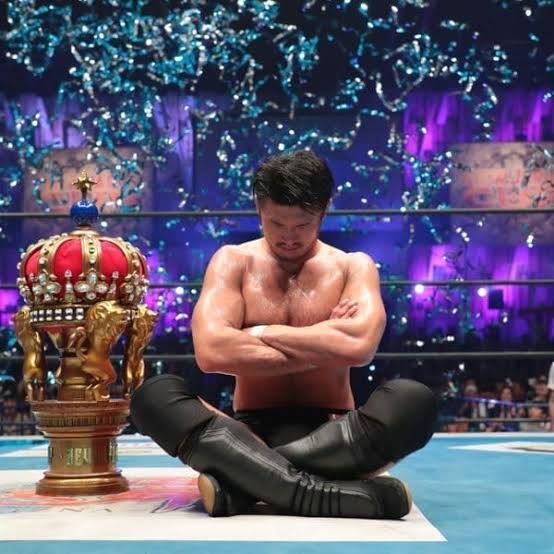
The early 2000s were a weird time for pro wrestling. As the Attitude Era died out and people started to wander from the sport of kings, a new combat sport took rise in Japan and the United States, and before you knew it every young man knew someone who practiced Jiu Jitsu and that R’s are pronounced like H’s in Portuguese. Mixed Martial Arts had been around, but the early 2000s saw the rise of PRIDE Fighting Championships in Japan. This was also around the time that the Fertitta brothers bought the UFC in America and began its ascent into the mainstream of American sports. Lots of us left pro wrestling behind for MMA, myself included. Though never fully out, I was absolutely more interested in MMA for a large portion of the 2000s than in most pro wrestling. I’ve always craved violence that felt real, scripted or not, and PRIDE especially had the pomp and bombast of pro wrestling baked into its core.
It wasn’t just us fans who left, though. The rise in popularity meant that a number of young and established athletes who had the skills but chose wrestling as a means of making money now could dream of “what if.” Some even decided to fight in addition to doing pro wrestling, especially in Japan, where the two share a much closer lineage. While the heights of the late 2000s UFC were cool, nothing could satisfy me like pro wrestling, and by the early 2010s I was less enamoured with MMA and really getting deep back into pro wrestling. My story isn’t unique, but the timing meant I never really got a good look at Katsuyori Shibata until he came back to New Japan in 2012.
I would have seen a few of his matches by that point by watching New Japan shows from the early 00s, and I had seen him teaming with KENTA in Pro Wrestling NOAH in the mid 00s, but by 2007 he had left pro wrestling completely to focus exclusively on MMA. His return at the 2012 January 4 Tokyo Dome show would be my first real chance to watch him in real time in a promotion I was watching most shows from. He would spend the first part of his return teaming with the legendary Kazushi Sakuraba. Sakuraba was a pro wrestler who had gone into MMA and made himself a national hero in Japan by defeating four members of the vaunted Gracie family, the originators of the Brazilian Jiu Jitsu that has become the basis and backbone of MMA, most famously defeating Royce, the star of the original UFC, after a bout that lasted well over an hour.
I had always appreciated Shibata’s style and knew he had been pretty good before he left. His match against Jun Akiyama in the short-lived Big Mouth Loud promotion was one of the best matches of 2005, an absolute dogfight that saw both men hit each other so hard that MMA suddenly seemed tame by comparison. In a real fight you can tap out and leave, but in pro wrestling you have to take it for as long as you’re supposed to, and these two brought genuine-seeming hatred into their classic bout.
His return to New Japan couldn’t have come at a better time. They had just begun to stream some of their shows live, and this opened up a whole new way for people to consume this stuff besides the sketchy download sites and torrents we had been used to. New Japan would go on to be the critical darling of the 2010s, racking up star ratings and awards both domestically and all over the world, thanks in very large part to the immense quality of the in-ring work. The company had one of the deepest rosters ever, and all of them were going out and performing at a pace that none of us had ever seen before. Shibata was one of those ready for the chance to show that not only did he not lose a step while gone, he was better than ever.
He approached every match as if it were a fight, predetermined or not. Shibata was the perfect encapsulation of the old wrestling adage: “You might not believe it’s real, but you’ll believe I’m real.” Shibata worked the “Strong” style like a fanatic disciple, every chop sounding like an explosion, every kick landing with a sickening thud, and every headbutt making you cringe in fear while you scream in excitement. Shibata approached the ring with a seriousness uncommon even in the more sports-oriented New Japan. His plain black trunks and boots were reminiscent of what the young lions on the undercard were forced to wear before they “graduate” to colorful outfits and are allowed to develop personalities. Serious WAS his personality. Even his nickname, “The Wrestler,” seems somewhat plain—of course he’s a wrestler, he’s in a wrestling promotion. This is a statement to everybody, though: he isn’t A wrestler, he’s THE wrestler. A reminder of what he was, wasn’t, and now is again.
The “New Japan era” gave me dozens of moments and matches that I hope to remember forever, but my two favourite matches both involved Shibata.
On August 4, 2013, he took on Tomohiro Ishii in the G1 Climax (their yearly round-robin tournament). This was the first time the G1 could be streamed live, and I happily plunked down over 130 dollars to get the whole package. It was already worth it a few days in, with a number of matches that left me in awe and wanting more.
I had a few hours to kill before work and brought that morning’s show up on my tablet while I had a coffee at the local Second Cup (why a Canadian coffee chain had a location in South Carolina is beyond me, but it was close to my job at the time). Immediately the two charged at each other, and I made an audible noise that caused the entire shop to look my way. I played it off as best I could as a bad cough, even going through the theater of asking for a glass of water. I knew immediately that this was the kind of match I couldn’t watch around other people. I left and went behind the building, sitting in a shaded area out of the sunlight so I could see, already sweating in the South Carolina heat, close enough to still pick up the WiFi.
The next 13 or so minutes will be forever etched into my mind. They fought at a pace so blistering that it didn’t make sense—two men throwing everything they had at one another, an absolute war. Ishii was lower on the pecking order in the eyes of the fans, but had just scored a massive upset over Hiroshi Tanahashi two days prior, and if he can beat the top guy in the promotion he can beat anybody. Ishii wrestles with a heart that makes him seem a foot taller than he is, the ultimate underdog to the point that he very quickly would stop feeling like one and be acknowledged as one of the best wrestlers in the world. Shibata was the technique to Ishii’s heart, coming in with the pedigree and prestige of someone near the top of the card—a true, trained fighter who had the ability and skill to put away his opponent, puncher’s chance be damned.
They tear into each other with elbows and forearms and some absolutely brutal-looking headbutts, but neither man is willing to give an inch. The crowd is also at a fever pitch, yelling and screaming like Ishii was John Lennon or Harry Styles. The same fervor I was feeling, but a packed Korakuen Hall is a better place for that energy than a Second Cup. Both men know exactly when to sell and when to shrug it off and ask for more. They hit big moves on one another, and both men are able to kick out at one at various points in the match, showing each other that they won’t be denied.
People often find these spots contrived, but to me they tell the story of masculine pride and ego.
To take the pain, smile, and ask, “Is that all you got?” is probably not the smart decision to make in the context of a fight, but it shows a toughness that makes the audience respect you and a willingness not to fold under pressure. If everyone has a plan until they get punched in the face, what better way to show that you still have a plan than by taking that punch, smiling, and delivering a haymaker of your own? These exchanges show the audience that these are hard men willing to fight in order to win. This isn’t an acrobatics show or a wrestling clinic; this is a bar fight between two tough bastards.
Kicking out at one serves a similar purpose. Taking a big move and not even allowing your opponent the satisfaction of the “standard” two count is a way to tell him that he may have you down, but you’re far from out. It also denies the person kicking out another second of rest, a chance for one more breath. They don’t care about the breath, though, because beating their opponent has become more important than air. These tropes can of course be overdone, and it takes the right participants to really make magic. New Japan itself would fall victim to it over the coming years, but the magic was there in such large amounts that day the match could have been Houdini vs. Copperfield.
If the Ishii match filled me with excitement and joy at the level of violence, Shibata’s April 9, 2017 match against Kazuchika Okada would fill me with a sense of fear that I hope to never experience again. After a number of years in the upper midcard of New Japan, Shibata had earned an IWGP World Title shot against Okada, the unquestioned ace and top star of the promotion. This was his chance to finally show he belonged at the top of New Japan, to show the audience and the higher-ups within the company that he was committed to New Japan and that his style of serious, tough, no-nonsense pro wrestling was the superior one. The two would engage in a war that contrasted 2013’s short brutality with nearly 40 minutes of chess disguised as a fight.
Shibata came at Okada with everything he had, using his superior technical skills to wear down the champion. The crowd in Sumo Hall was molten as they chanted his name. This was finally the moment his fans had been craving since his return to the company; the title was well within his grasp. Okada was the champion for a reason, though, and seemed to have an answer for everything in Shibata’s arsenal. After a marathon session of chops, slaps, submissions, grappling, and reversals, Shibata did what came naturally to him, and in a desperate attempt to finally achieve the glory he had seemed destined for years ago, he threw a headbutt to Okada.
Why did he have to throw that God damned headbutt?
The crack of skull on skull makes a sound that I’ll never forget as the crowd gasps. We almost immediately get a visual of a trickle of blood running down Shibata’s head, a final visual of a warrior at his greatest triumph and worst defeat. Shibata emptied his clip, but somehow, against all odds, Okada refuses to go down. A few minutes after the headbutt, Okada hits his signature Rainmaker and Shibata stays down for the three count.
I was overwhelmed with disappointment upon watching it live, but also positive I had just seen maybe the best match in professional wrestling history. Upon waking up the next morning, I learned that I had possibly witnessed a tragedy in real time. That sick-sounding headbutt had caused a subdural hematoma, a buildup of blood on the brain, and temporarily paralyzed Shibata, who had collapsed backstage almost immediately after the match. He was immediately rushed into emergency brain surgery, and at that point his chances for survival were grim, let alone wrestling. All of a sudden I was overwhelmed with a different feeling of disappointment, one in myself.
I thought the headbutt was one of the coolest spots of all time when it happened. I leapt off the couch and stifled a scream so as not to wake my wife, and watched the rest of the match standing on my feet. Shibata throwing one last desperate attempt to put down the champion was the perfect move for his character and reaffirmed everything I love about him and his style of wrestling. I will always have a soft spot for somebody with more balls than brains, and the headbutt showed exactly that: desperation, need, passion all overriding logic and safety in order to achieve the ultimate prize in the sport. Inject it into my veins!!! That spot got my adrenaline pumping and reminded me why I love pro wrestling so much at 5 a.m., and by noon I felt responsible for the possible death of who may have been my favorite wrestler in the world at the time.
Pro wrestling is dangerous. We all know this, and only the most stubborn outsiders still tell tales of ketchup as blood and wrestlers never being in any danger. That said, the style that has always excited me the most has been a highly physical and dangerous one. From shoot style to deathmatch to the head drops of ’90s All Japan, I get excited when it comes across as “real.” This lends itself, unfortunately, to a lot of people I admire suffering horrific consequences. In addition to Shibata, the last decade has seen high-profile long-term injuries with Shinjiro Otani and Yoshihiro Takayama. 2009 saw the tragic in-ring death of Mitsuharu Misawa, another all-time favorite.
This is before we get into the effects of head trauma and CTE on pro wrestlers. Suicides abound in the wrestling business, and perhaps the most notable pro wrestling criminal case was yet another one of my favorites, Chris Benoit, now most notable for the murder-suicide against his wife and young son.
I can’t shake the feeling of complicity. In moments like these, when I think of the violence I’ve cheered for, I feel dirty. I still do, sometimes. My idealized version of wrestling is built on real violence, and in the worst cases, it costs people their lives and their livelihoods. Reconciling that with myself is hard. It’s not that I don’t care. I care too much. And that’s the moral dilemma that has kept me up some nights. I know I’m not going to stop watching, because I can’t help what I like, but I know there has to be a better solution than donating to GoFundMe pages or crying when I rewatch Shibata’s headbutt.
Shibata would eventually recover, making an appearance that August and telling the audience, “I am alive, that is all.” Another moment that choked me with emotion. He would regain his strength and become a coach for New Japan, training and guiding the next generation in his style and philosophy. By 2021 he would return to the ring in a limited capacity, and today he is a regular member of the AEW roster.
It was truly a miracle, and a testament to Shibata’s strength and determination that he can seemingly wrestle a safer and smarter style that allows him to continue to do the thing he loves the most. I don’t think that necessarily absolves people like me from criticism for our desire to see the kind of wrestling Shibata used to do. I just don’t know what to do about it. Sometimes there are no easy answers. Sometimes you are alive, and that is all.
 Raised By the Ring